.png)
Residential Complex BALOTEȘTI Residences

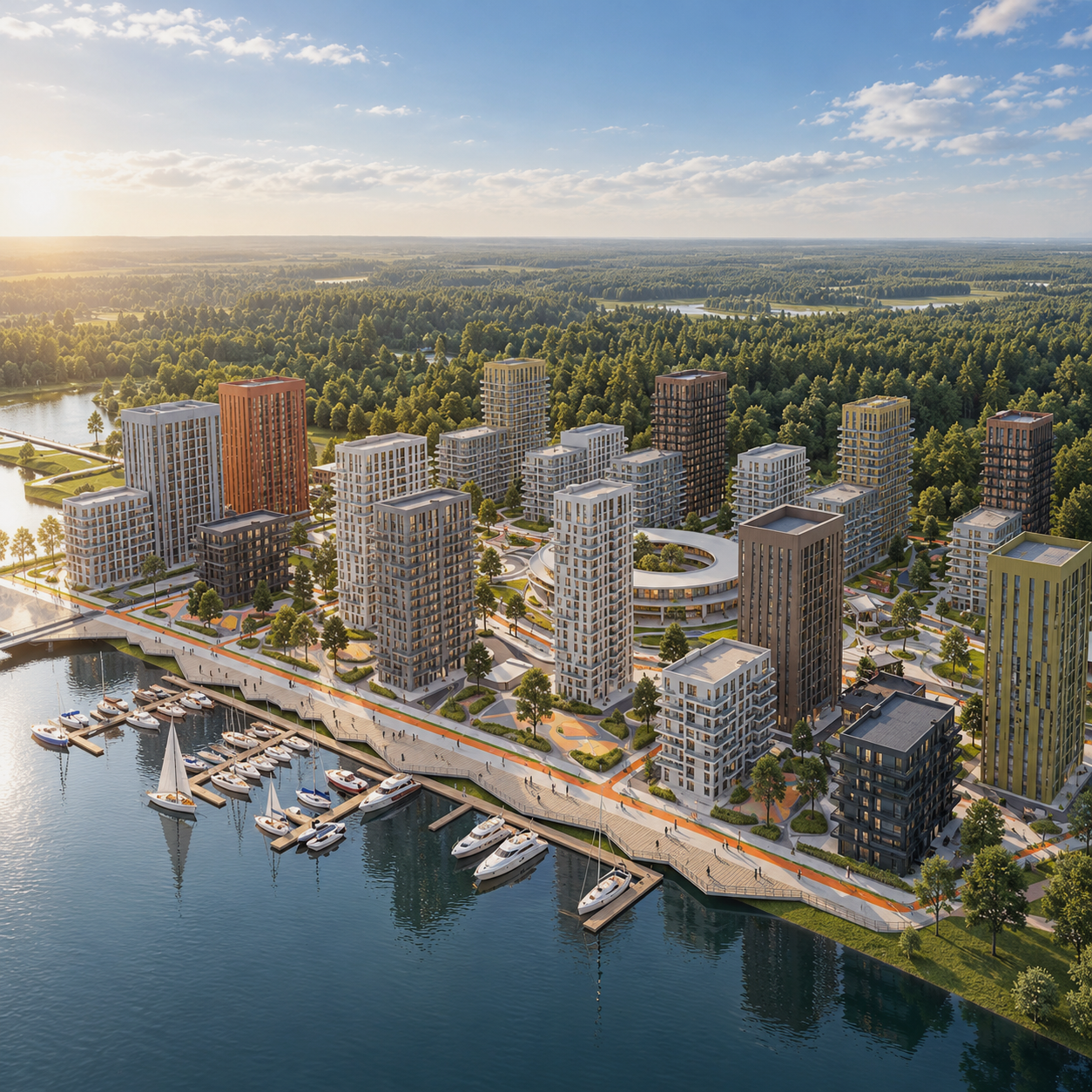
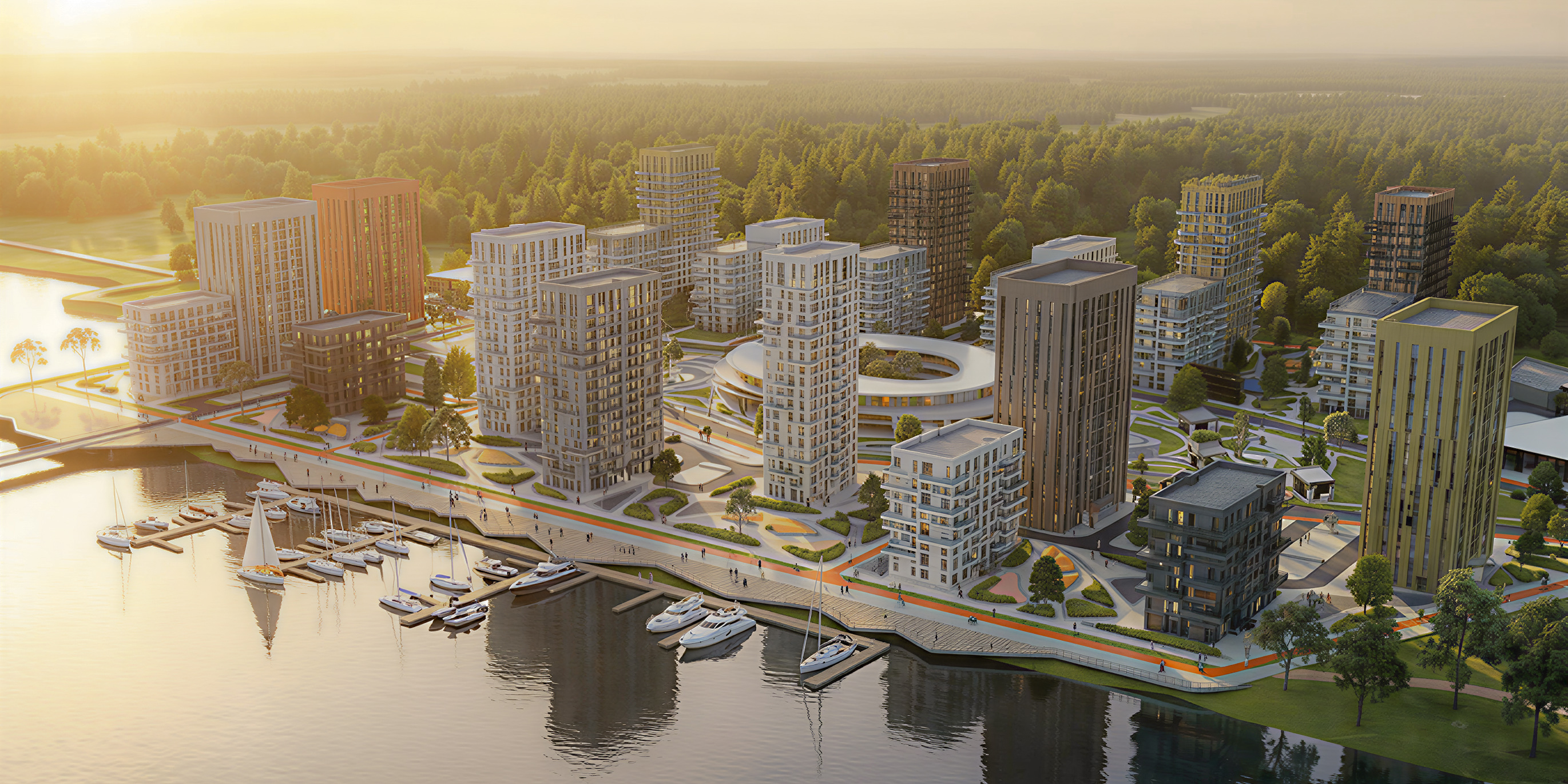
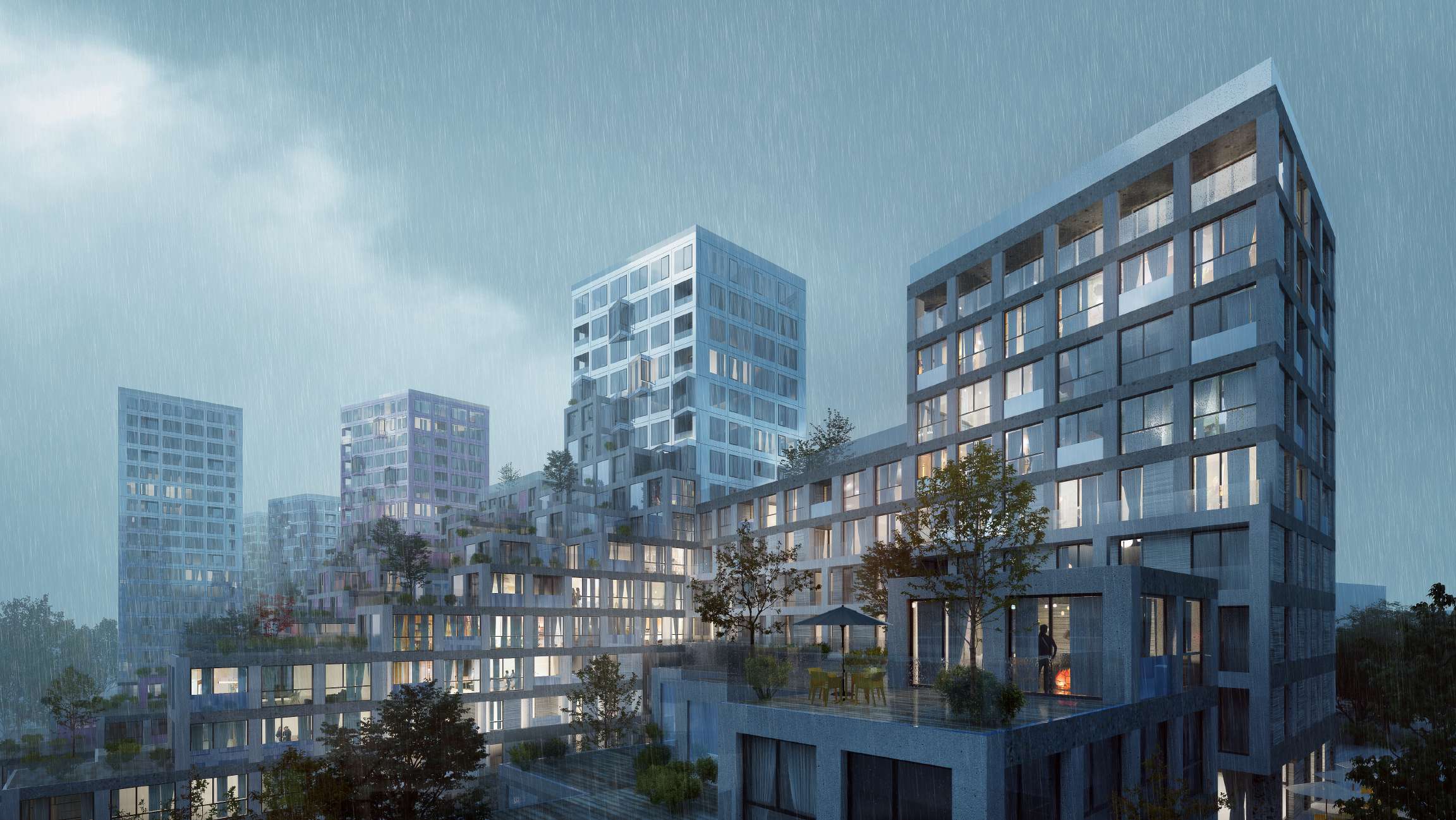
A modern “all-inclusive” residential complex designed to harmonise urban comfort with natural surroundings. Located between a forest and a river, BALOTEȘTI offers a safe, diverse, and visually appealing environment where every resident - from children to seniors - can live, learn, do sports and socialise within walking distance of all essential amenities.
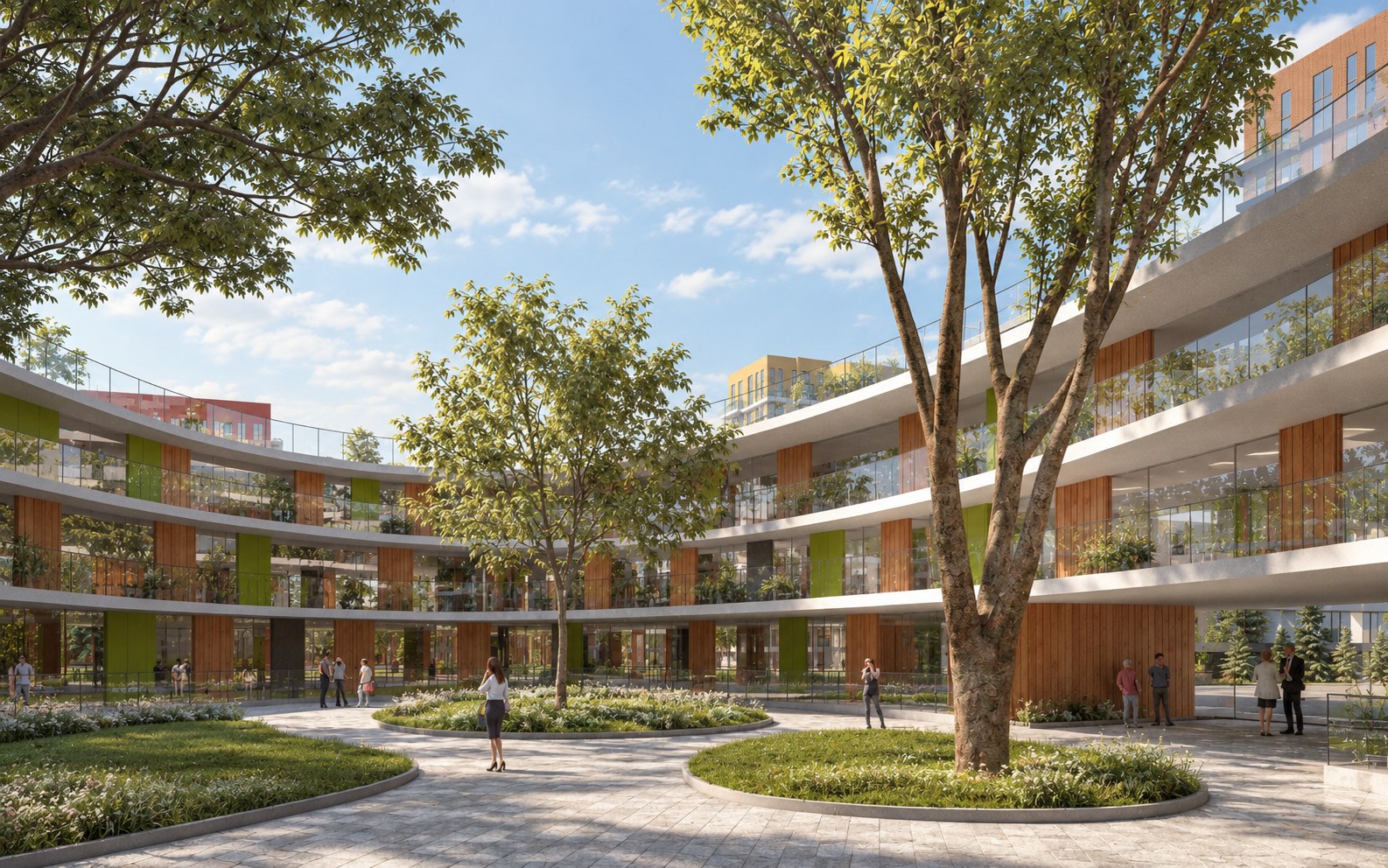
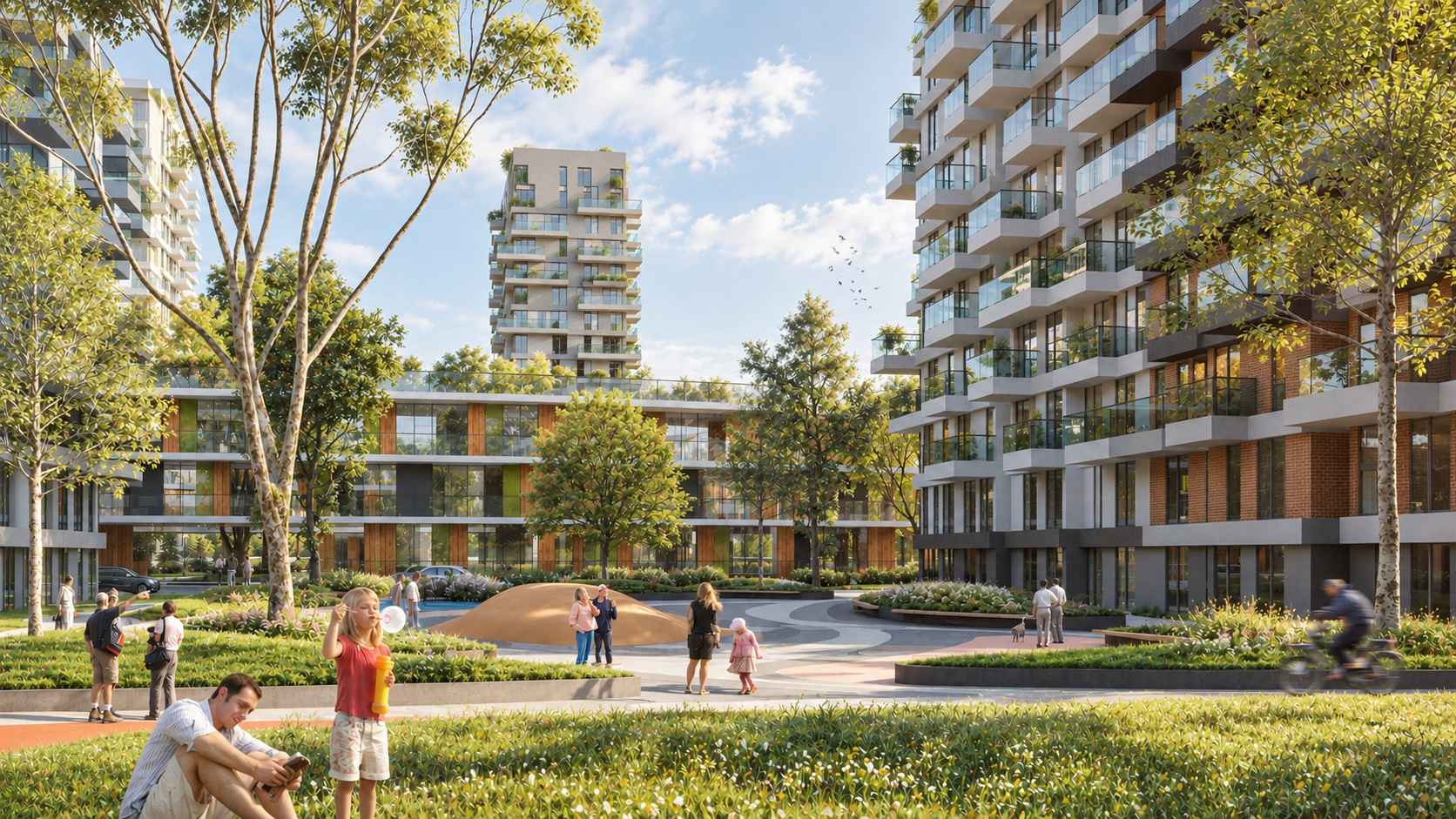
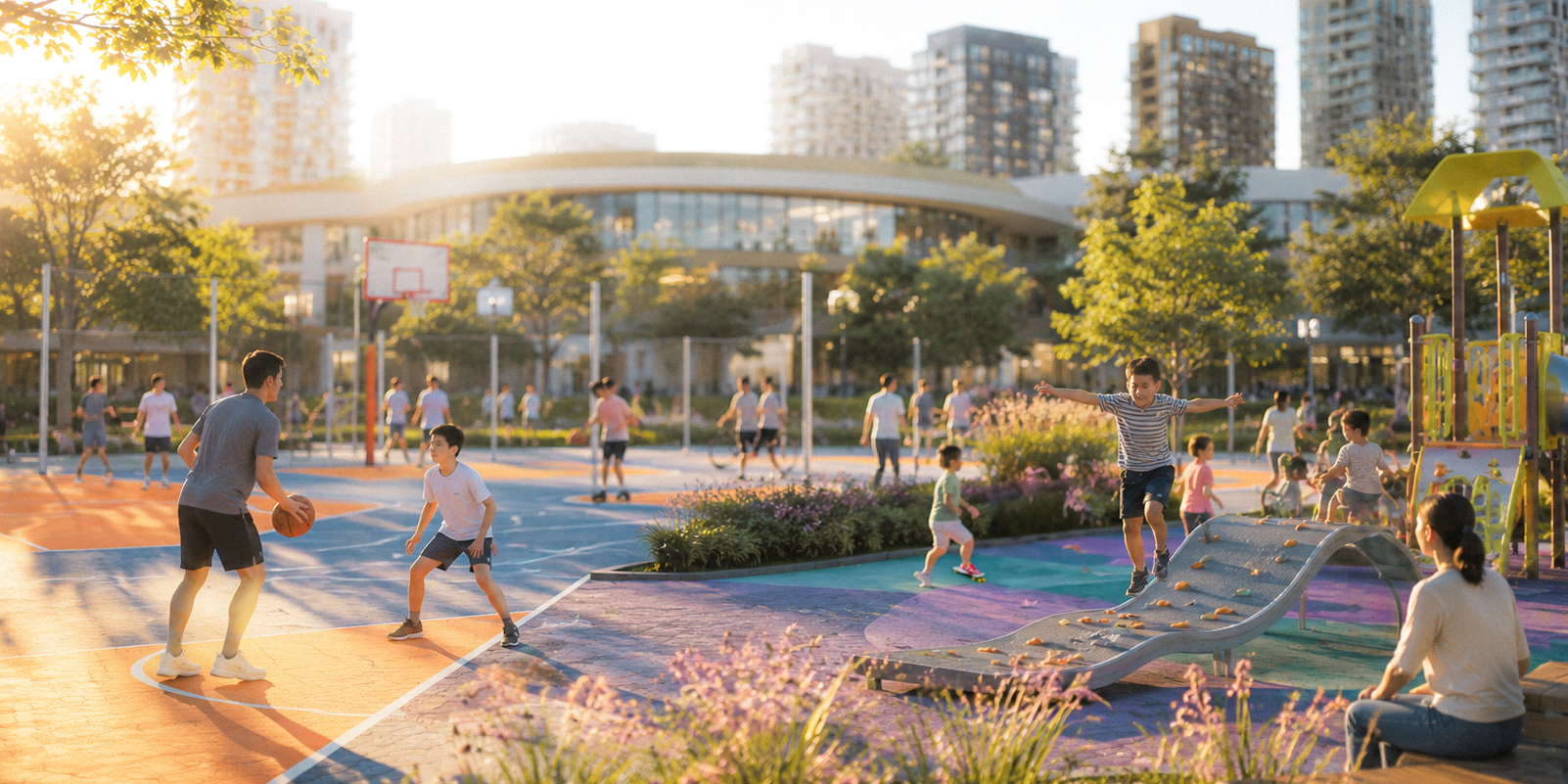
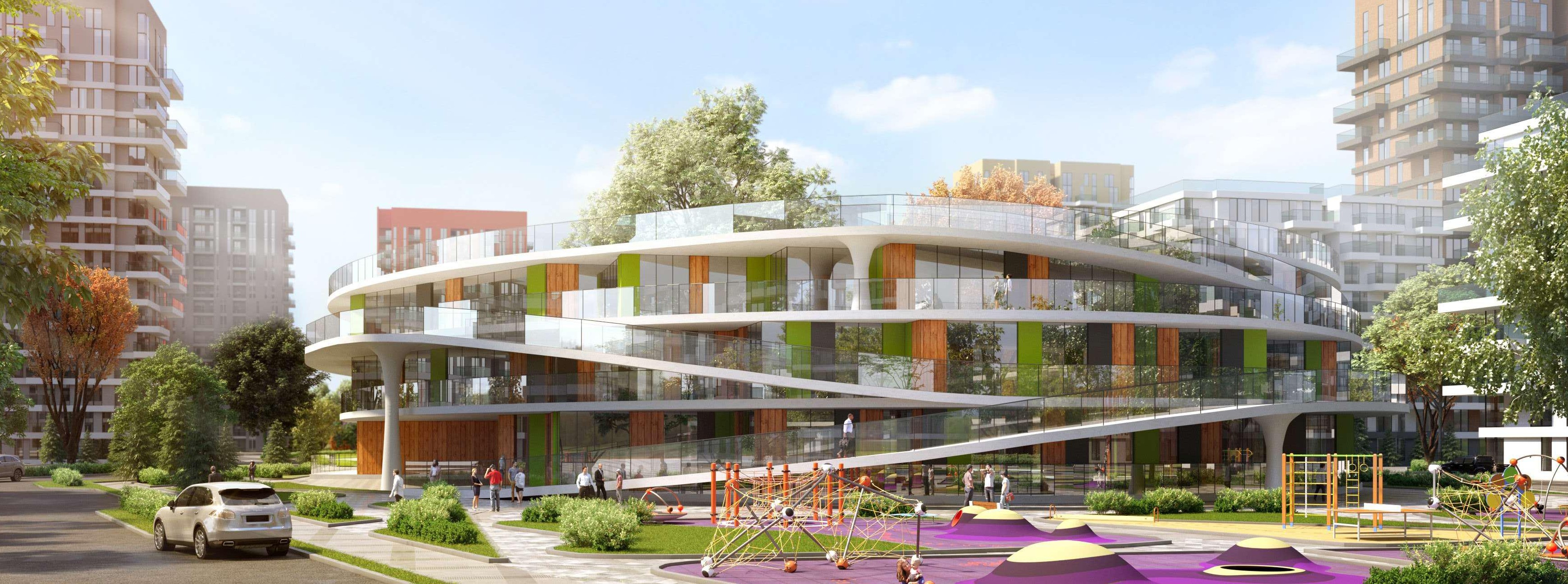
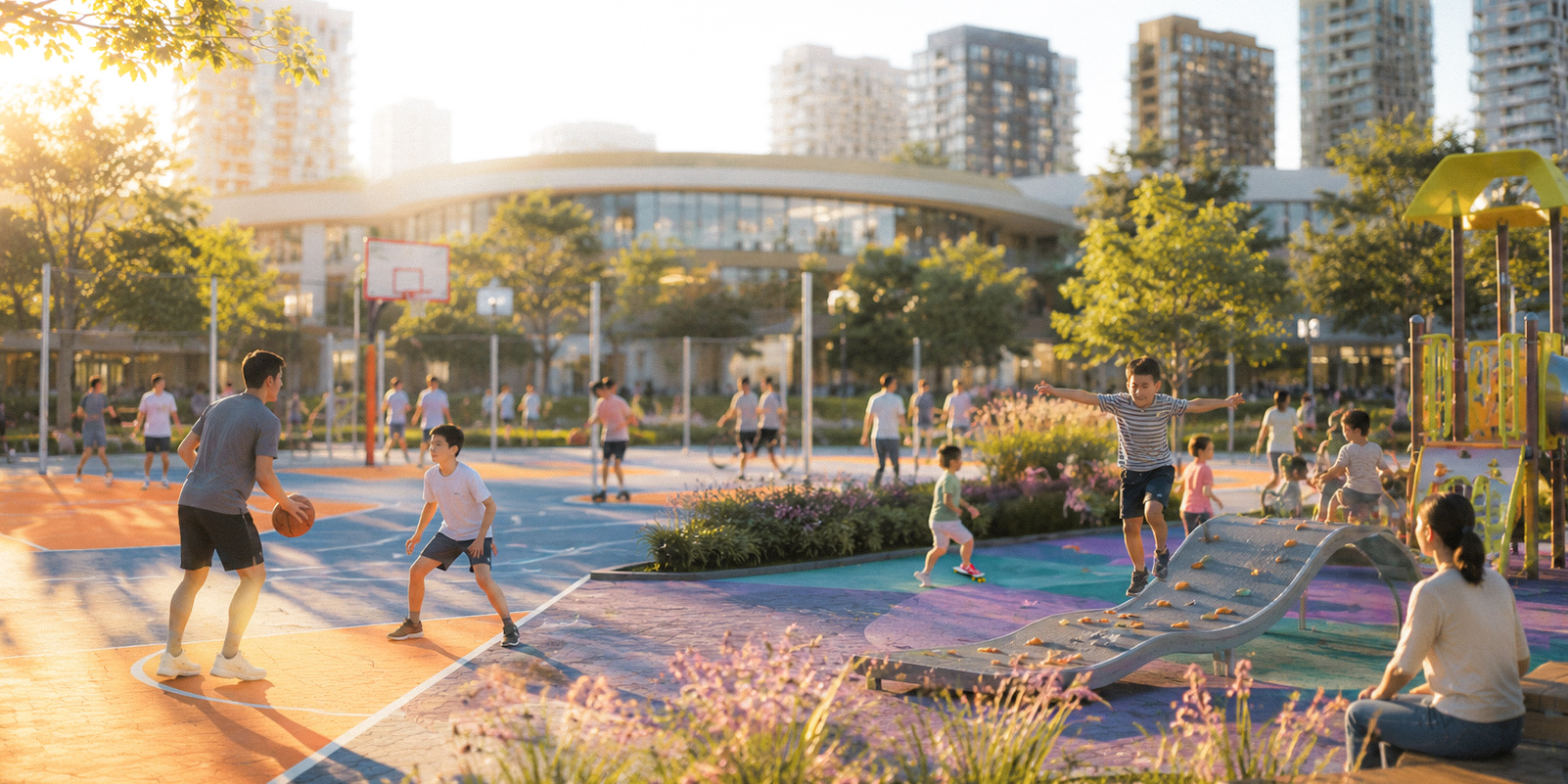
The complex was developed in line with the latest trends in urban design, featuring dedicated cycle paths, car-free inner courtyards, contemporary playgrounds, and well-equipped sports grounds that promote an active and community-oriented lifestyle.
Project Overview
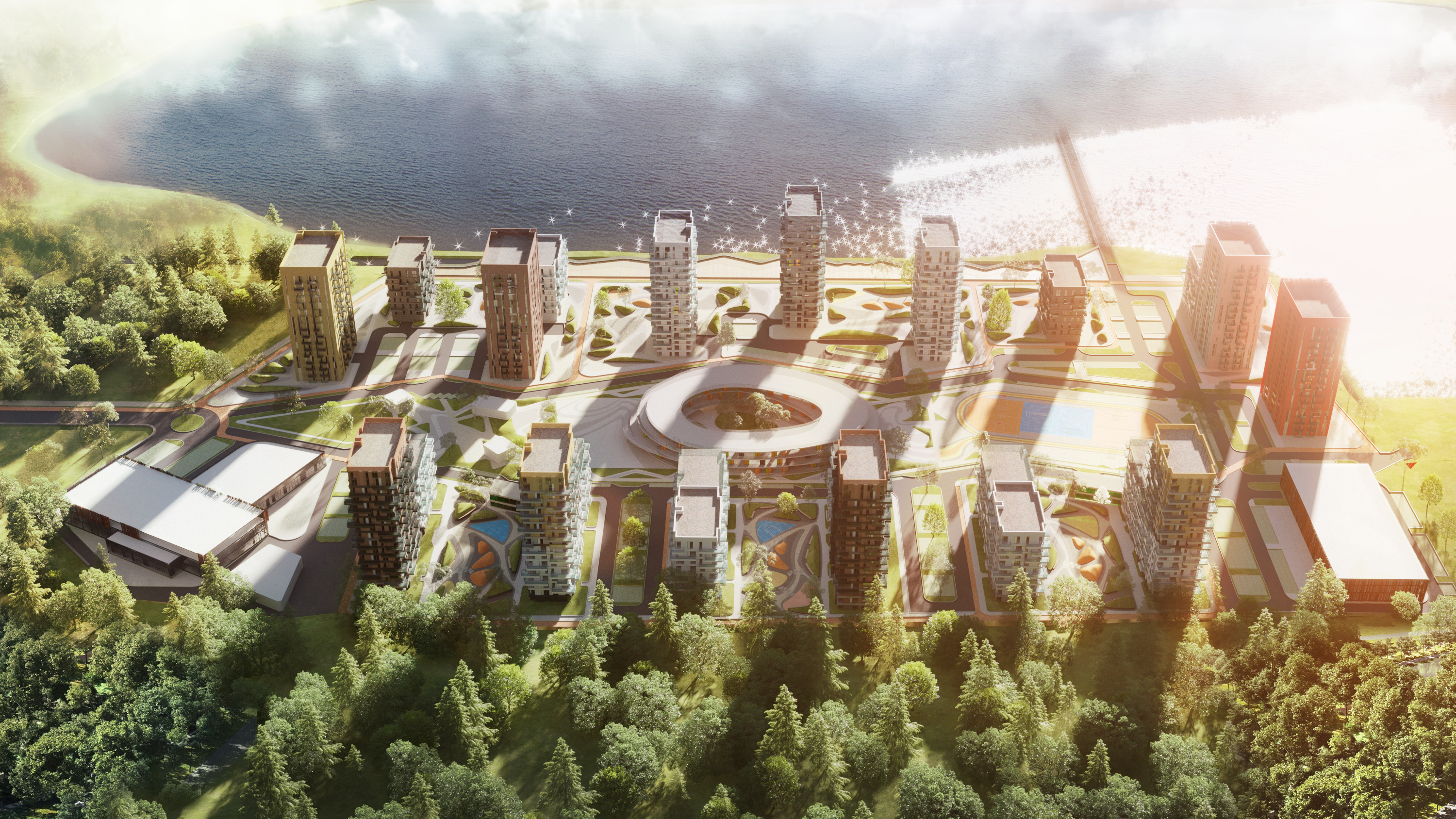
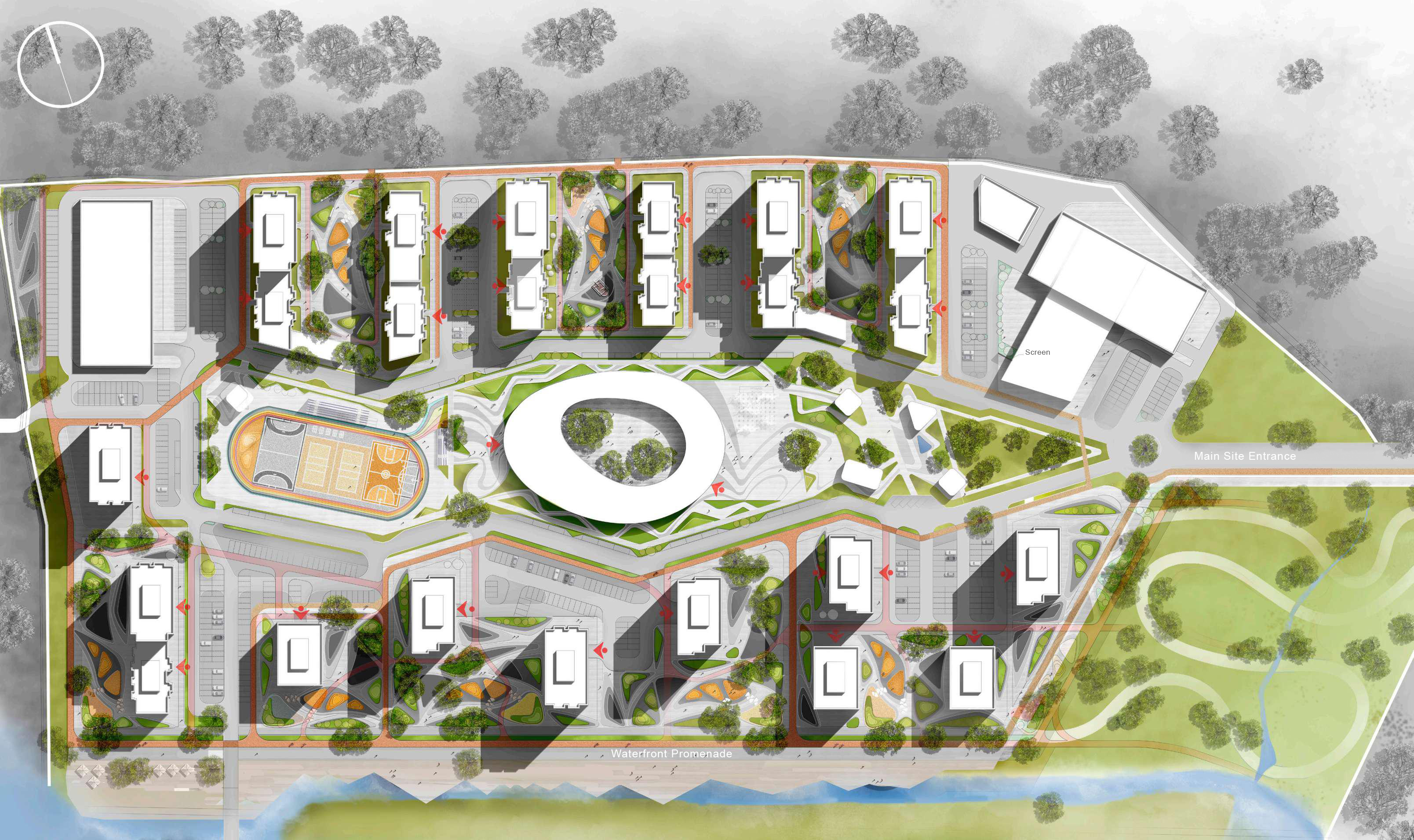
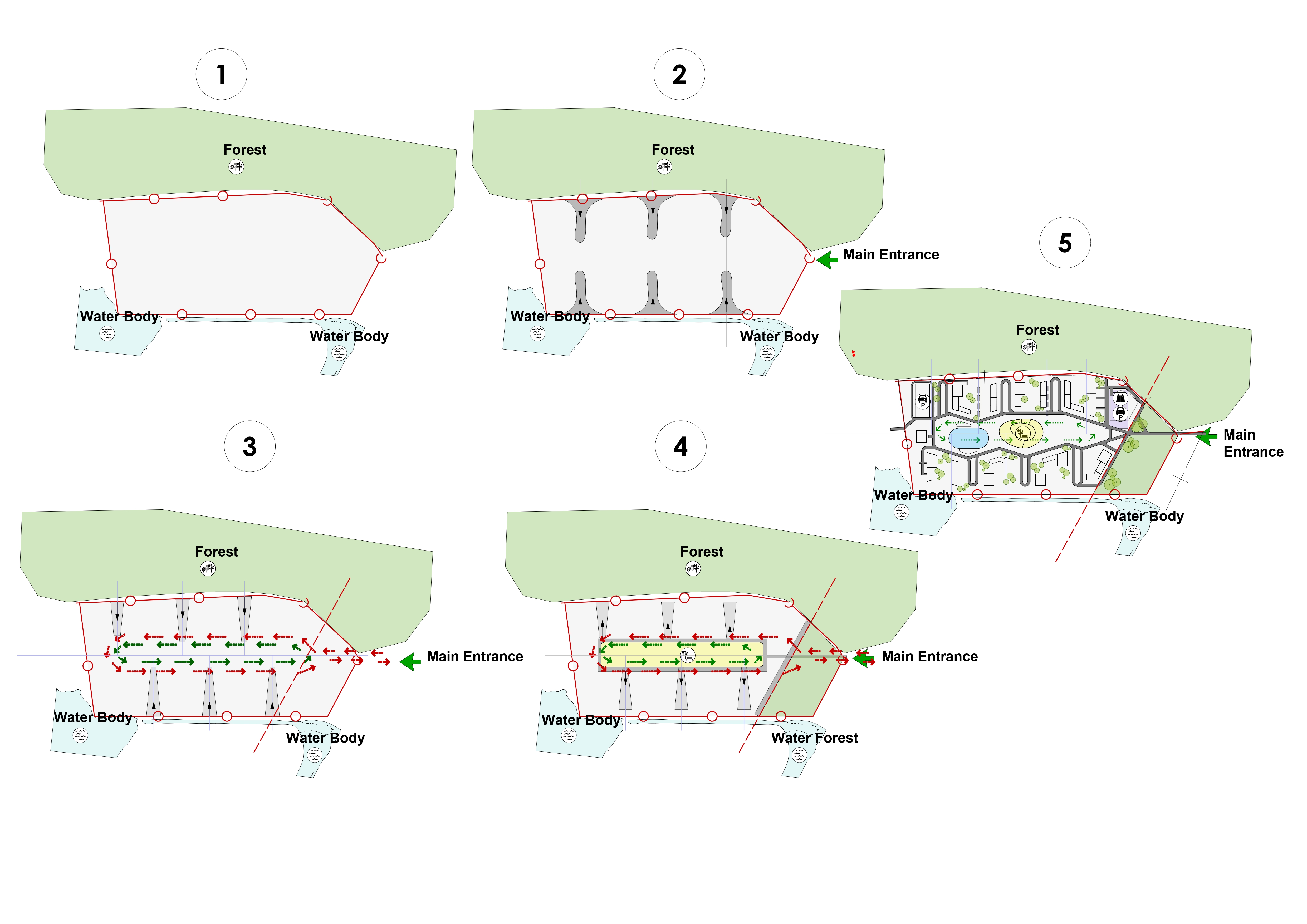
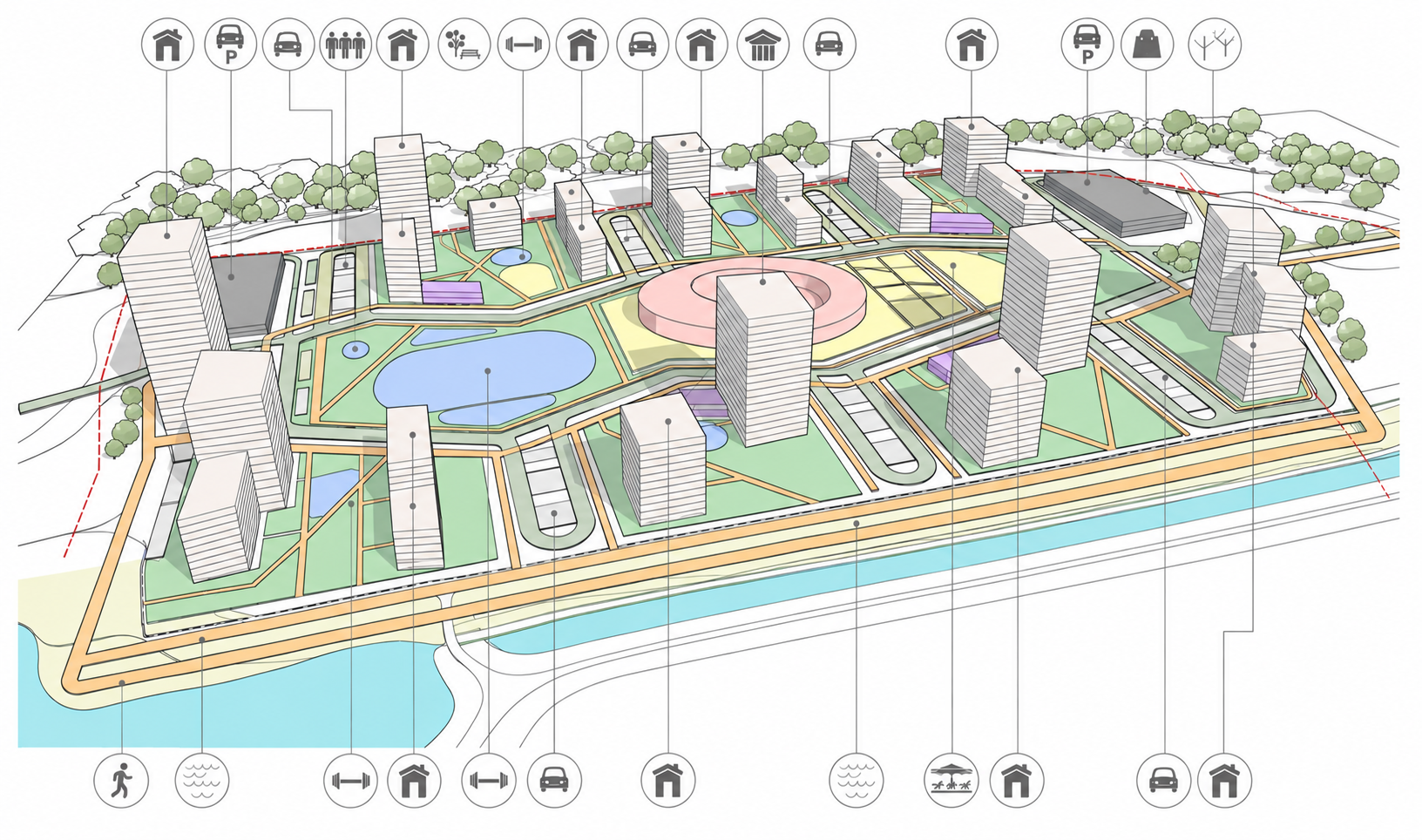
BALOTEȘTI was envisioned as a new residential district that leverages its unique natural context. The master plan ensures direct access to the forest and river while integrating recreational and social spaces into the urban structure.
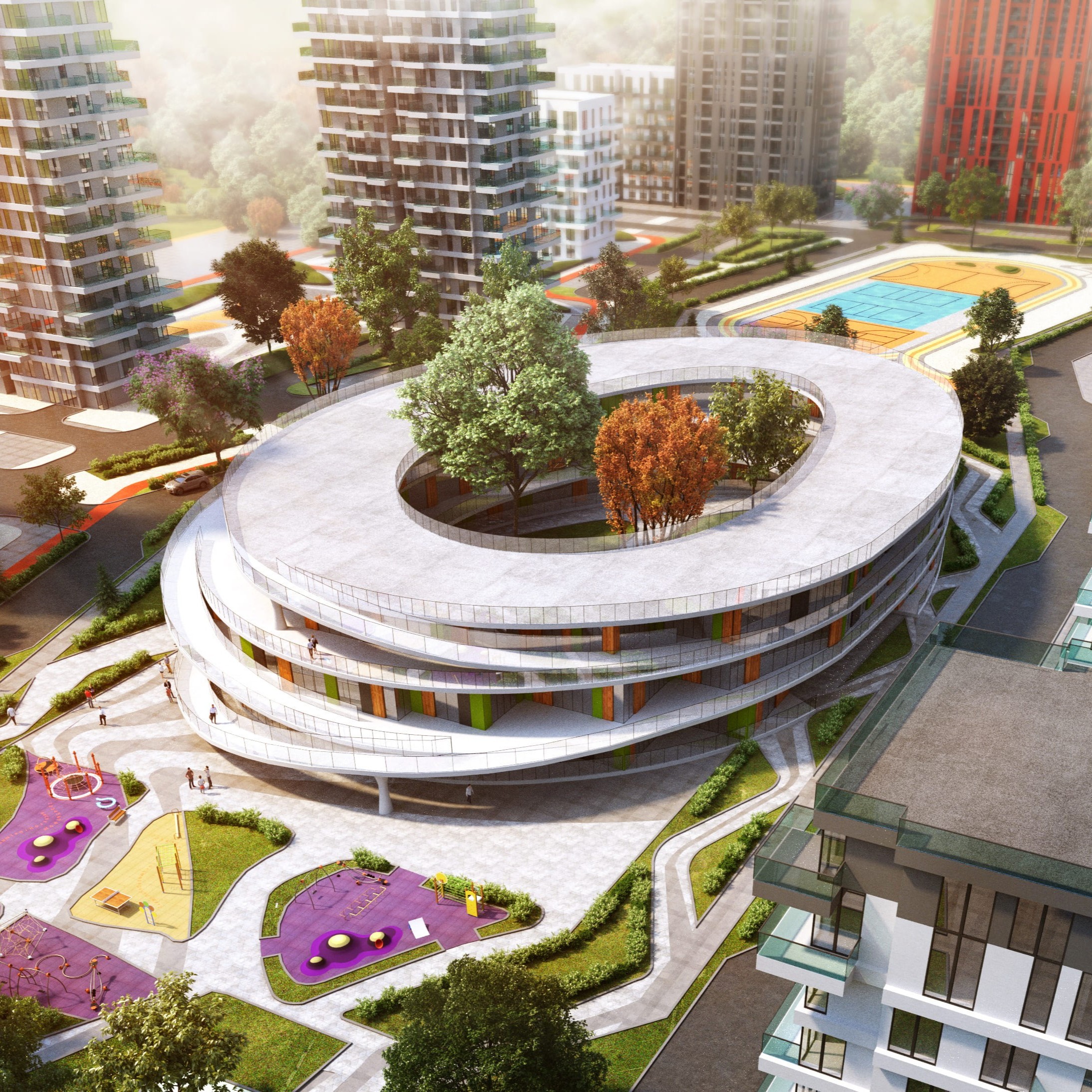
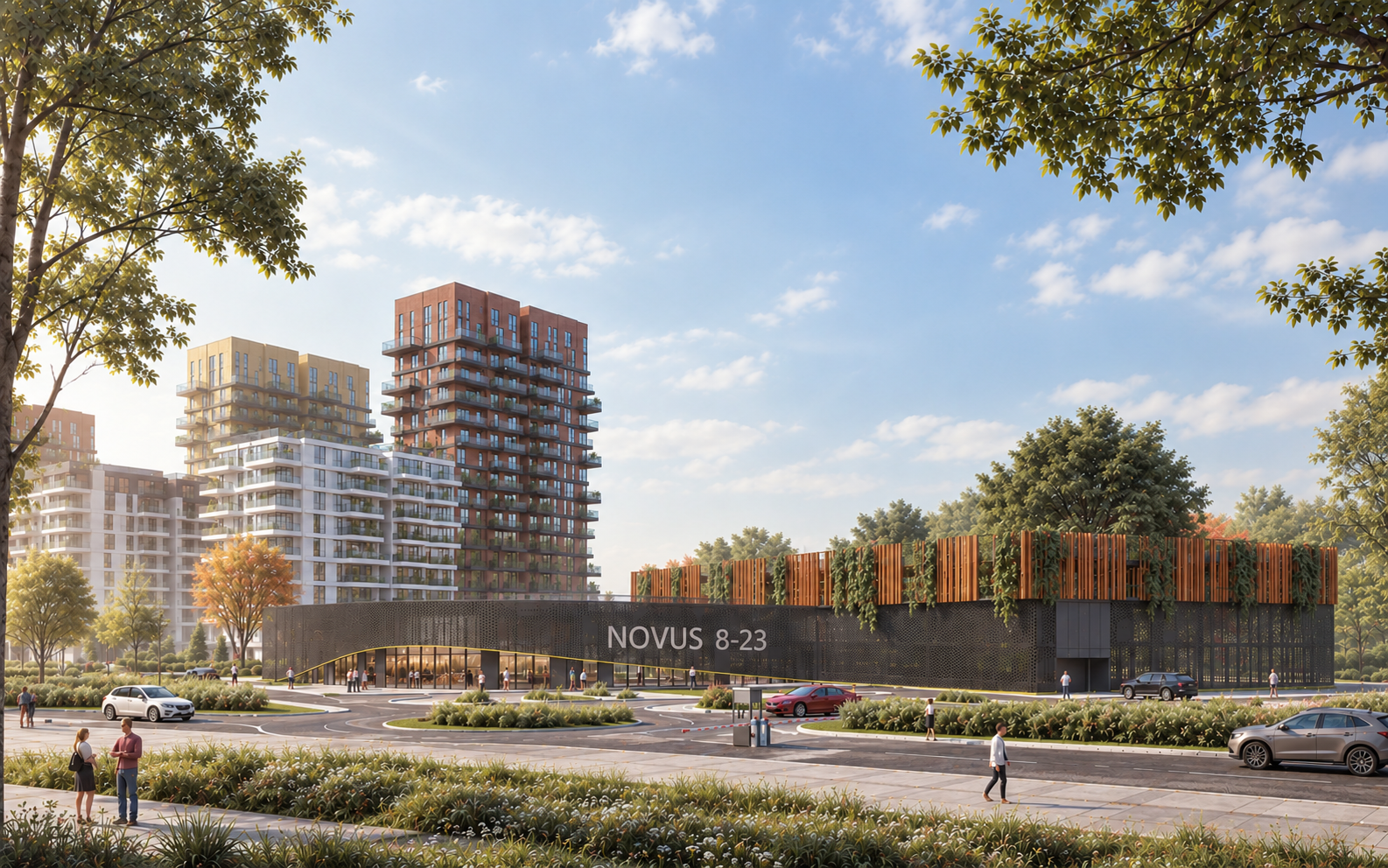
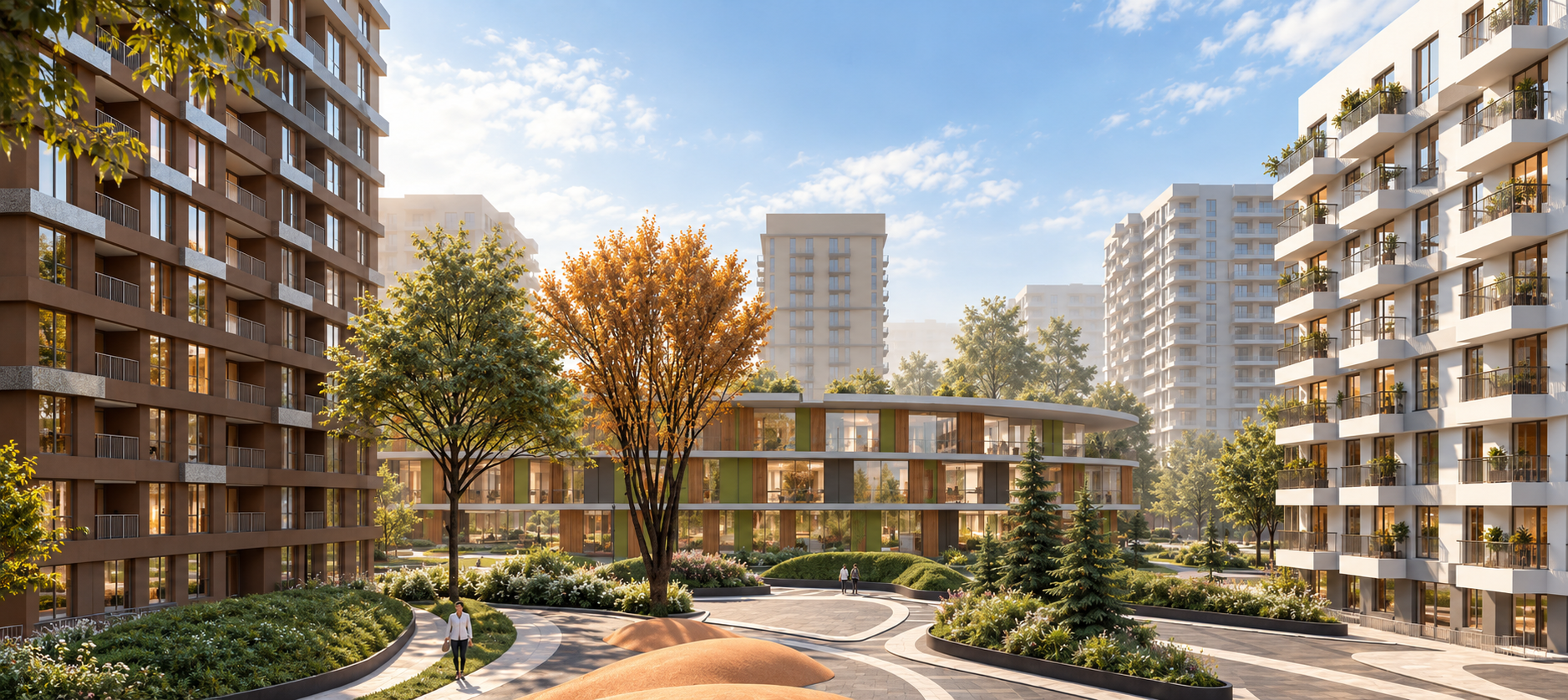
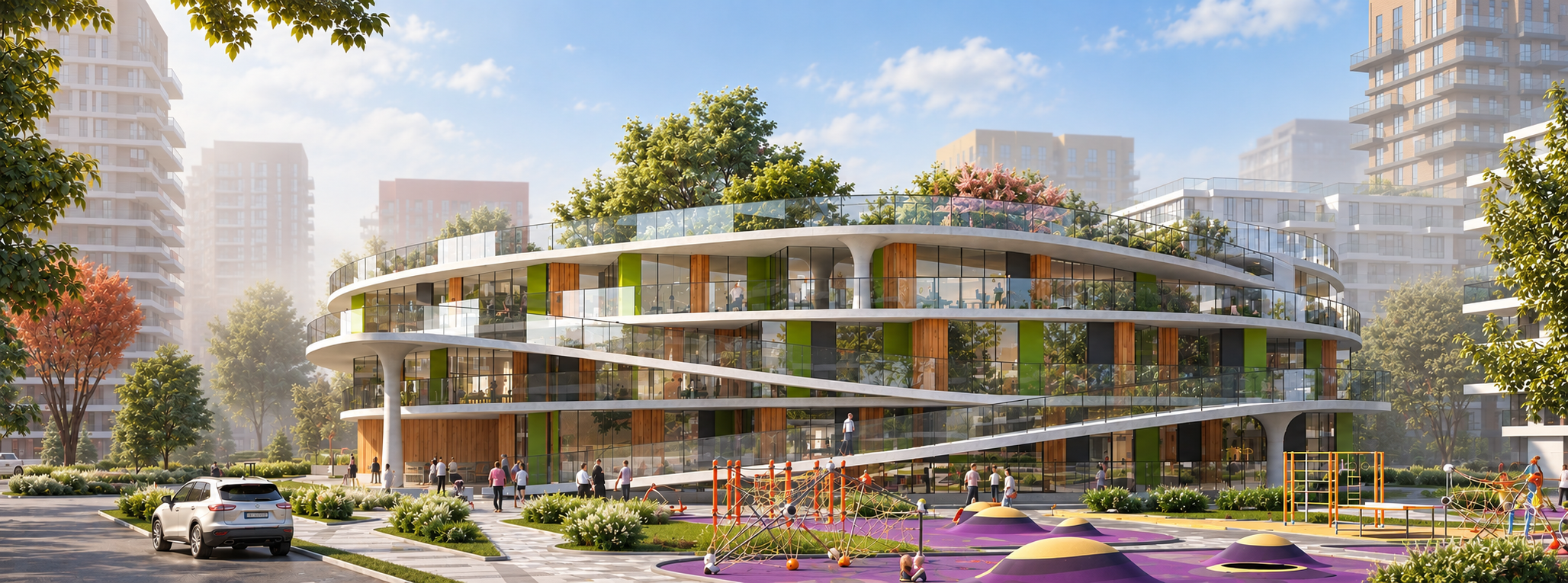
The development includes residential buildings of 9 and 16 storeys, a school and kindergarten, sports facilities and playgrounds, a supermarket and parking areas, social hub, event and leisure areas with an amphitheatres, as well as landscaped car-free courtyards and pedestrian alleys.
Thanks to accessible infrastructure and a human-scale, medium-rise layout with the vast distances between the buildings, the complex creates a feeling that home extends beyond the private apartment. The entire residential environment becomes a shared living space that encourages social interaction, strengthens community bonds, and enhances safety and care for shared spaces – an important response to the uncertainties and hustle of modern city life.
Strategic Significance
BALOTEȘTI represents a human-centered and ecologically integrated model of residential development. By merging architecture, landscape, and social infrastructure, the project rethinks the suburban housing format, transforming a peripheral location into a self-sufficient and vibrant community living.
The complex was designed to ensure that residents do not need to leave the area for everyday services. Fully equipped with essential social and infrastructural facilities, it functions as a true “city within a city” and follows the principles of the 10-minute accessibility concept. This approach enhances social diversity, convenience, and overall safety, while creating a livable, all-ages and family-oriented neighborhood that balances urban density with the qualities of a natural retreat.
-p-2000.jpg)
.png)
Scale & Programme
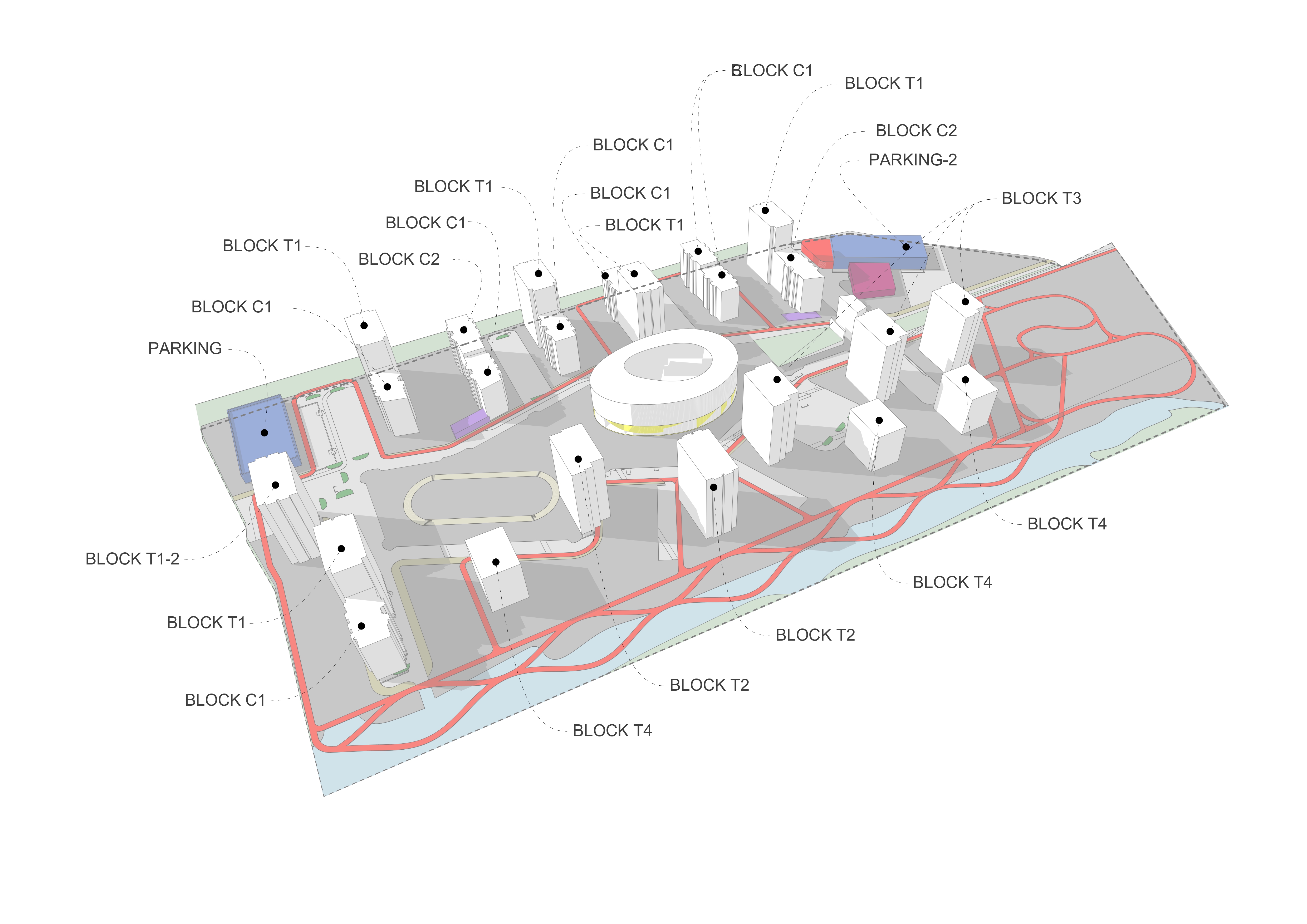
- Residential Sections: 9 and 16 storeys
- Core Functions: Housing, school, kindergarten, sports zones, supermarket, social hub, multi-storey car parks
- Public Spaces: Car-free courtyards, event square, amphitheatre
- Design Focus: Nature integration, social connectivity, façade diversity
- Accessibility: All social functions equally reachable from any building
Key Challenges & Solutions Implemented
- Water-saturated soils that do not allow for denser construction and larger building footprints, as pile foundations would make the project financially unfeasible.
- Building within a sensitive natural context of forest, river, and environmental protection zones
- Providing sufficient parking while preserving green space
- Ensuring equal access to social infrastructure
- Achieving good daylight and landscape views for all apartments
- Balancing architectural diversity with modular construction method
- Delivering a high living quality while remaining affordable for the middle class
- Integrating infrastructure into the landscape as visual accents and spatial variety
- Setback requirements from the arterial natural gas supply line
Economic Impact
The project establishes a new benchmark for integrated residential development - combining nature, infrastructure, and community in one cohesive ecosystem.
- 1,200+ residential units with direct access to green and waterfront areas
- 100% pedestrian courtyards and car-free zones improve safety and well-being
- >10,000 m² of social and commercial infrastructure: school, kindergarten, supermarket, social hub, sports & playground areas
- 15-20% increase in average property value projected after completion
- 500+ permanent jobs created through construction and ongoing operations
By merging urban comfort with natural balance, the complex drives sustainable economic growth and enhances the long-term livability and investment appeal of the district.
Result
BALOTEȘTI complex delivers a safe, comfortable, and socially active living environment seamlessly connected with nature. Car-free courtyards and green corridors form an inviting network of public spaces, while the social infrastructure ensures daily convenience and community life. The architectural diversity of the buildings, combined with views of the forest and river, creates a distinctive and harmonious residential identity.
BALOTEȘTI Residences demonstrates how residential development can balance density, ecology, and community. Through thoughtful master planning, integrated social programs, and landscape-driven architecture, the project creates a new typology of suburban living, sustainable, human-scaled, and deeply connected to its natural surroundings.
Get Your Express Architectural Analysis

Proven Results. Featured Work.
.jpg)
.svg)
-p-2000.jpg)
.png)


.svg)


.png)
Fill in the form below and our team will get back to you shortly.
.svg)