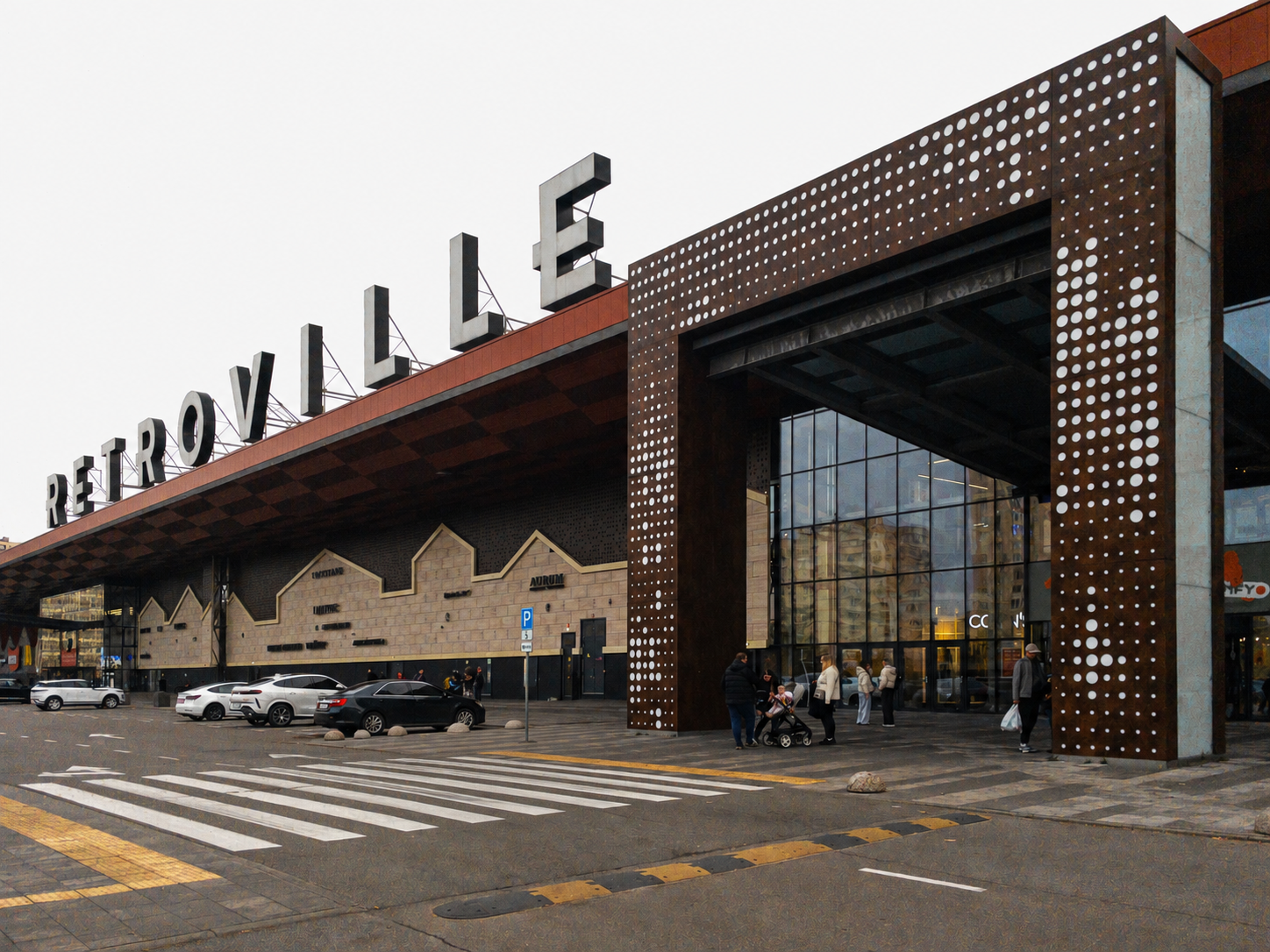
SvitloMall Mixed-Use Complex

How We Integrated Retail, Offices, Living, and Leisure into a Single Urban Landmark
38 209,65 m²
total GBA
71
services apartments
11250 m2
office space
1522,51 m2
supermarket

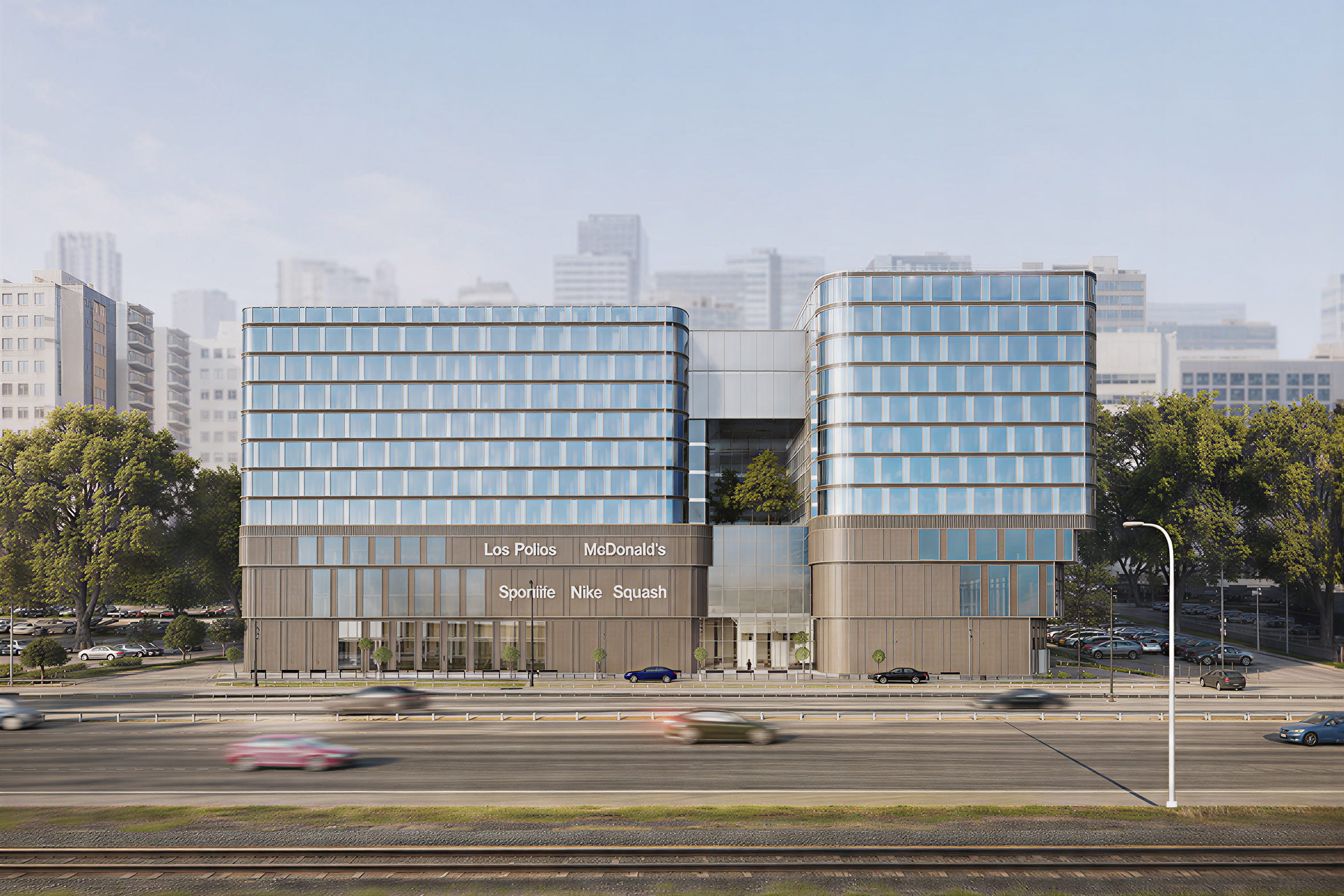
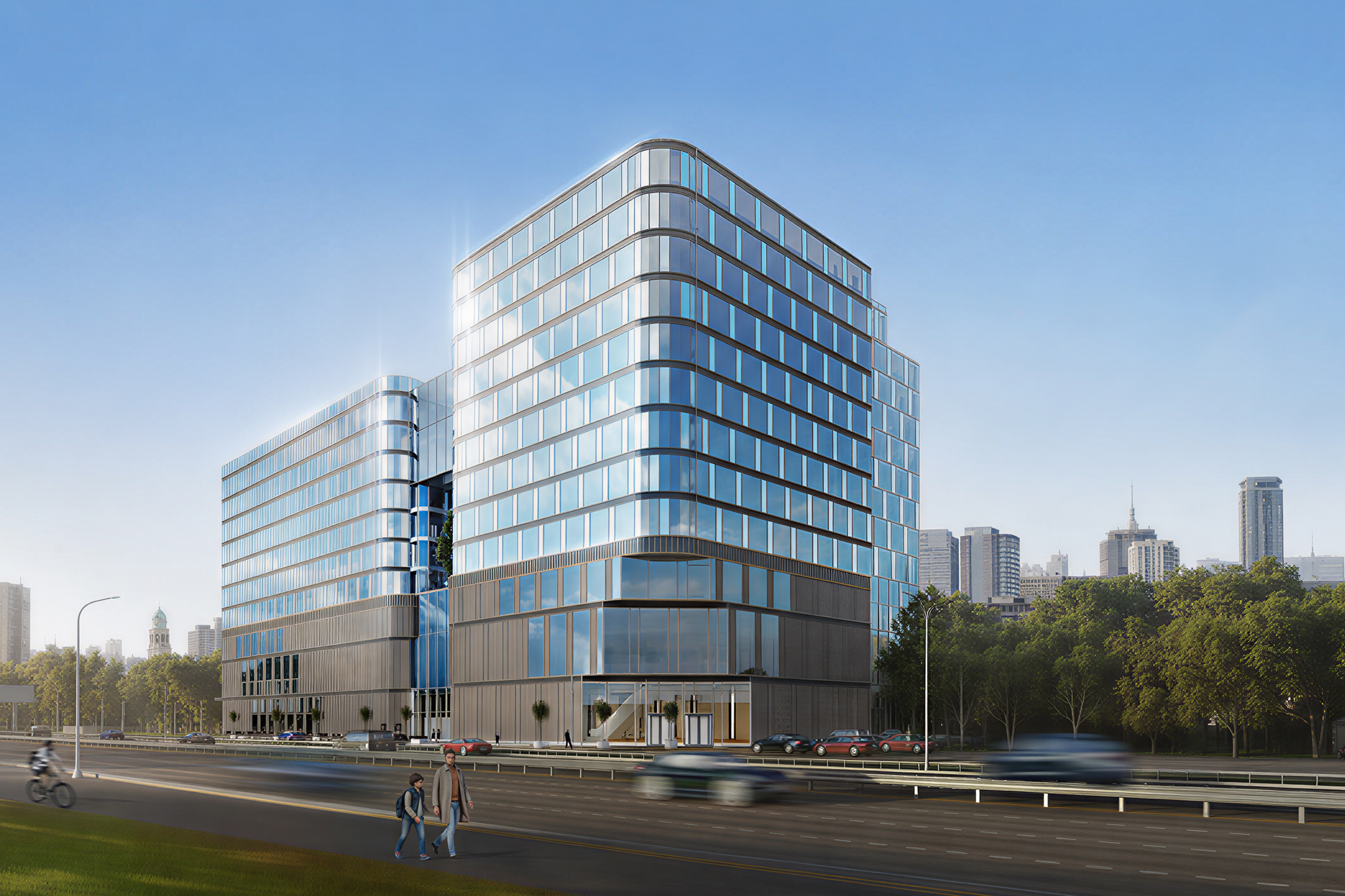
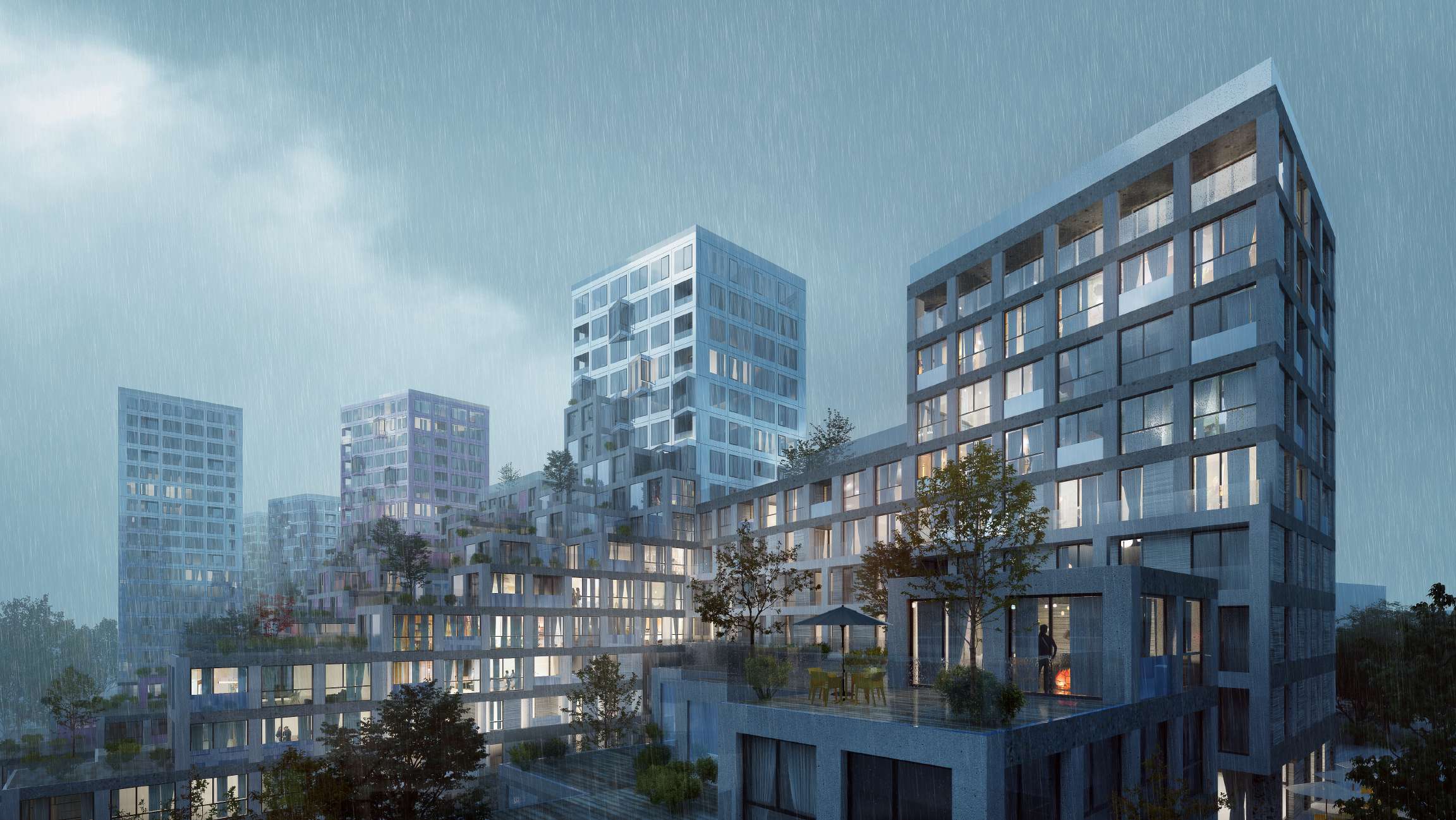
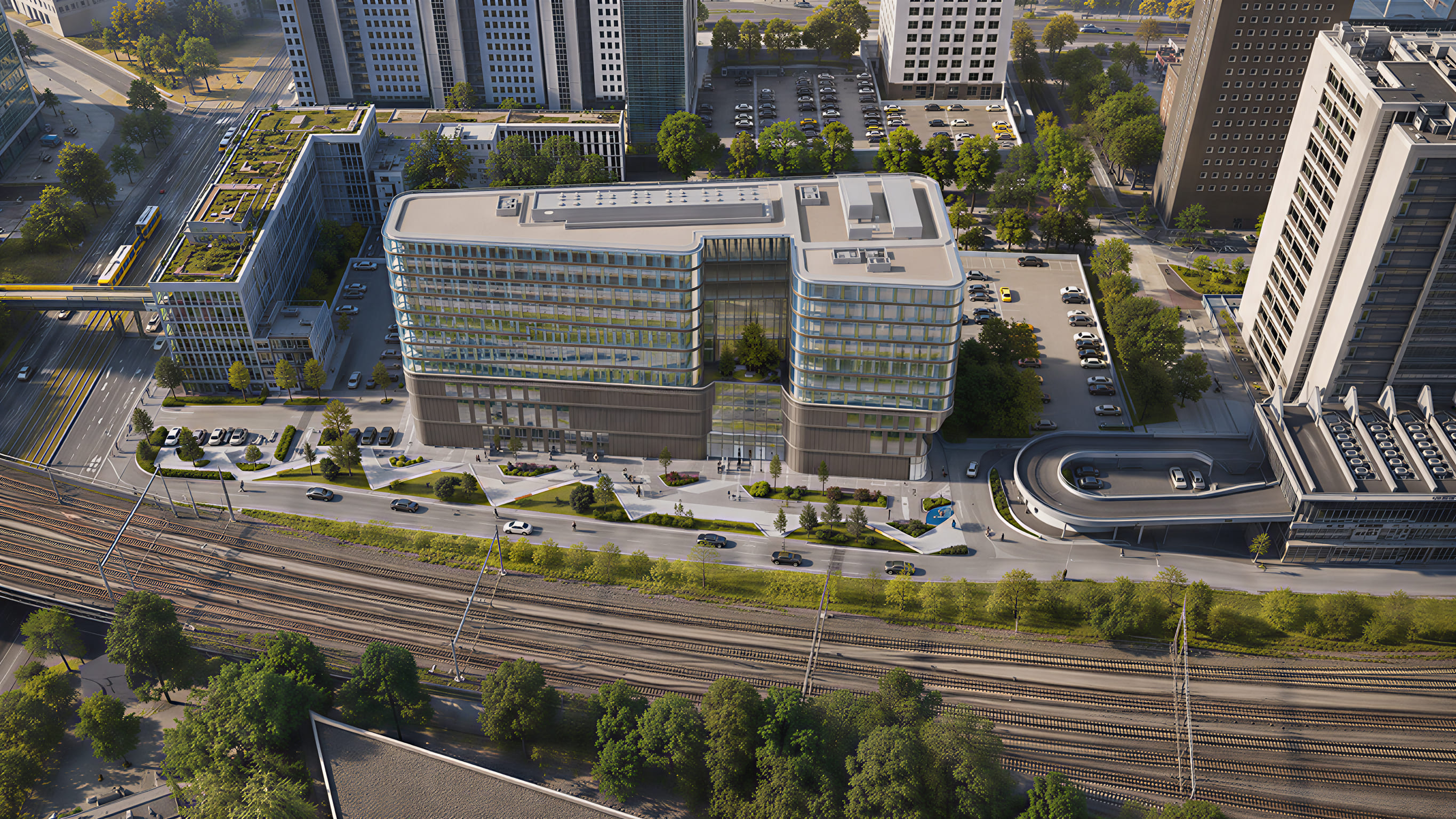
An integrated mixed-use building that combines retail, residential, workspace, and leisure functions within one cohesive architectural volume.Designed along a key urban transport corridor, SvitloMall redefines the idea of a multifunctional complex blending urban energy, comfort, and landscape integration within a dense metropolitan environment.

Project Overview

SvitloMall unites multiple urban functions in a single structure:

  • Retail centre with a modern covered atrium and rooftop
  • Supermarket, restaurants, and a food hall
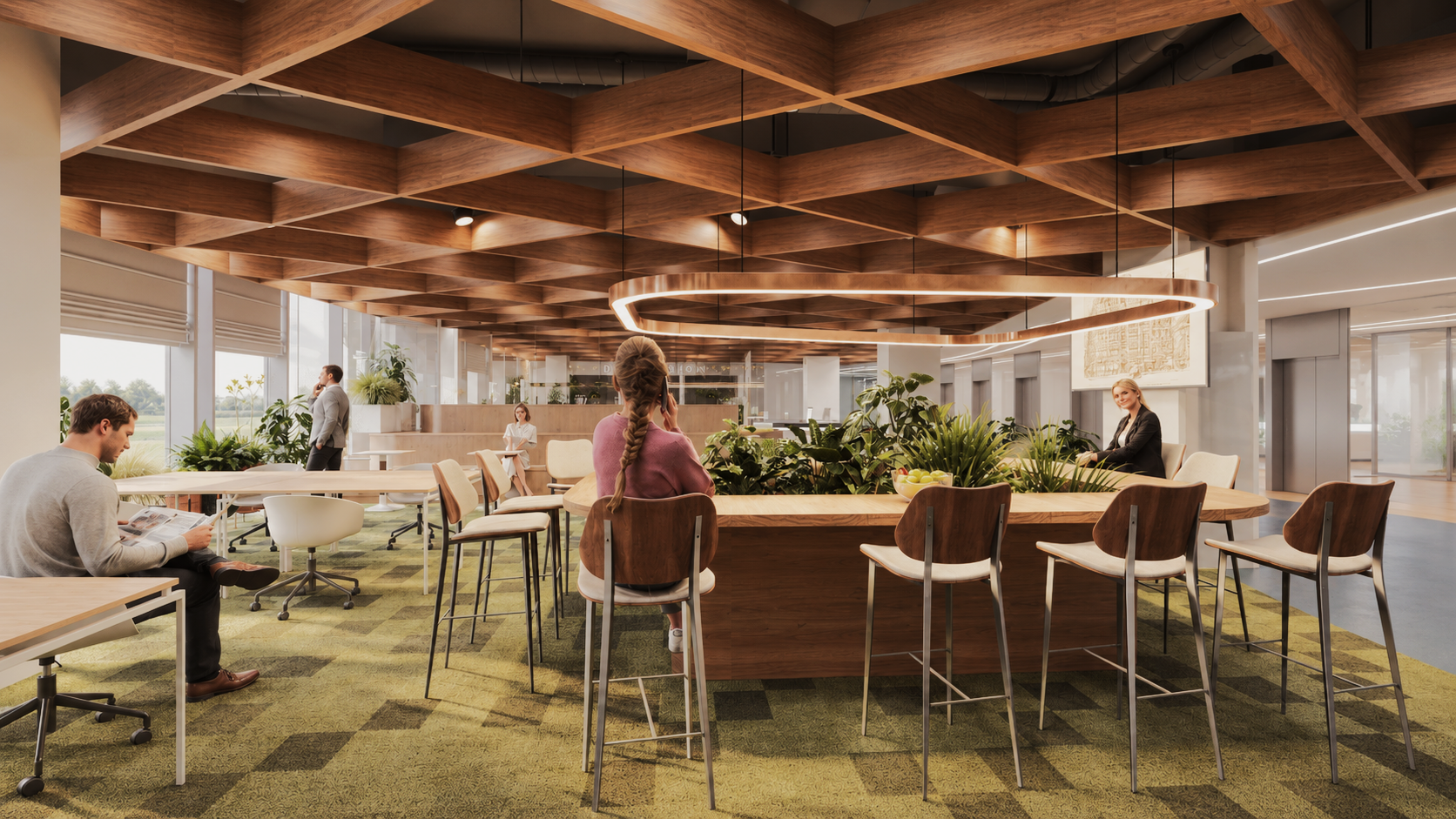
  • Offices with flexible layouts and dedicated circulation cores
  • Serviced apartments with a separate entrance
  • Sports club with swimming pools and SPA 
  • Rooftop terraces for events and public recreation
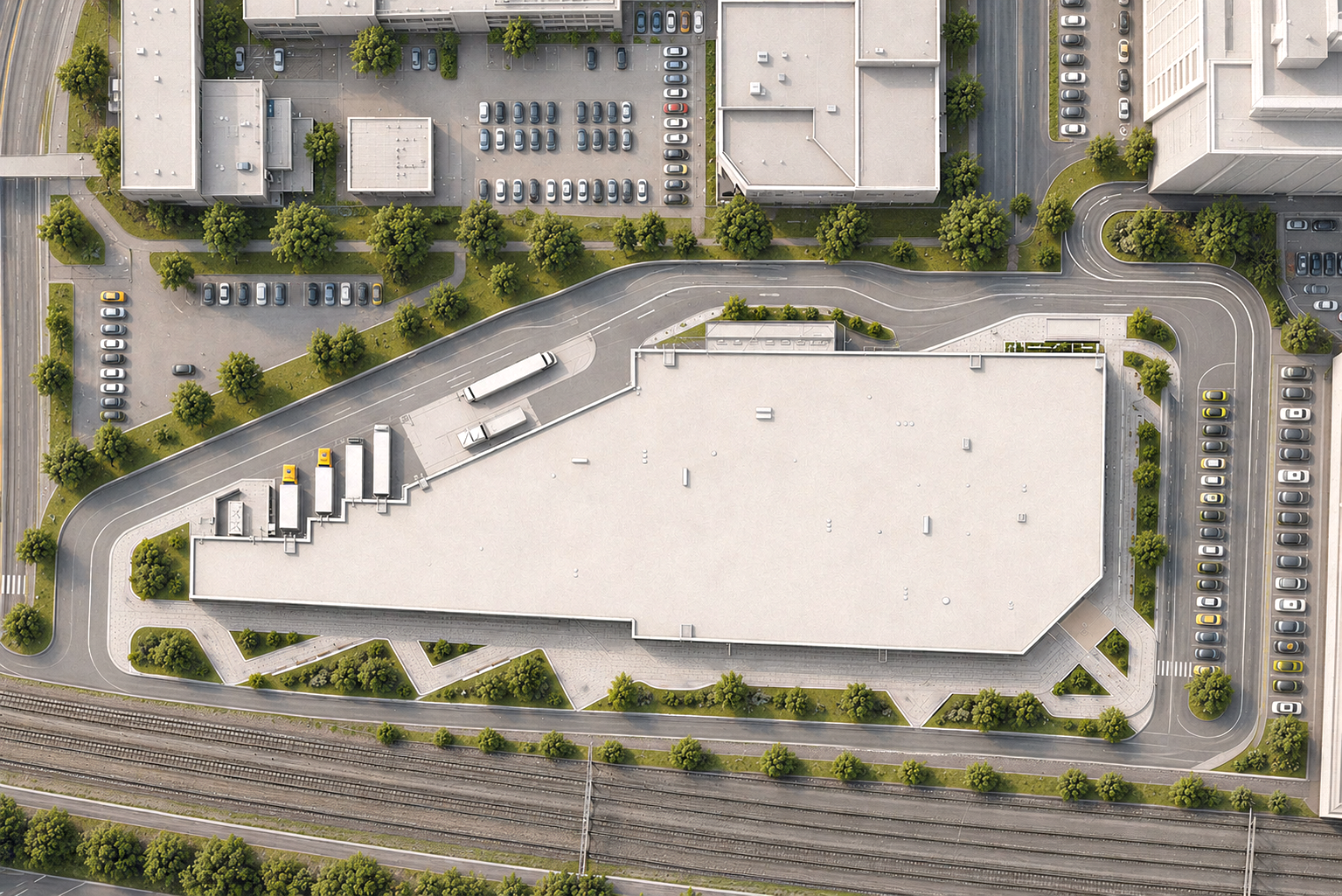
  • Two-level underground parking with optimised access routes

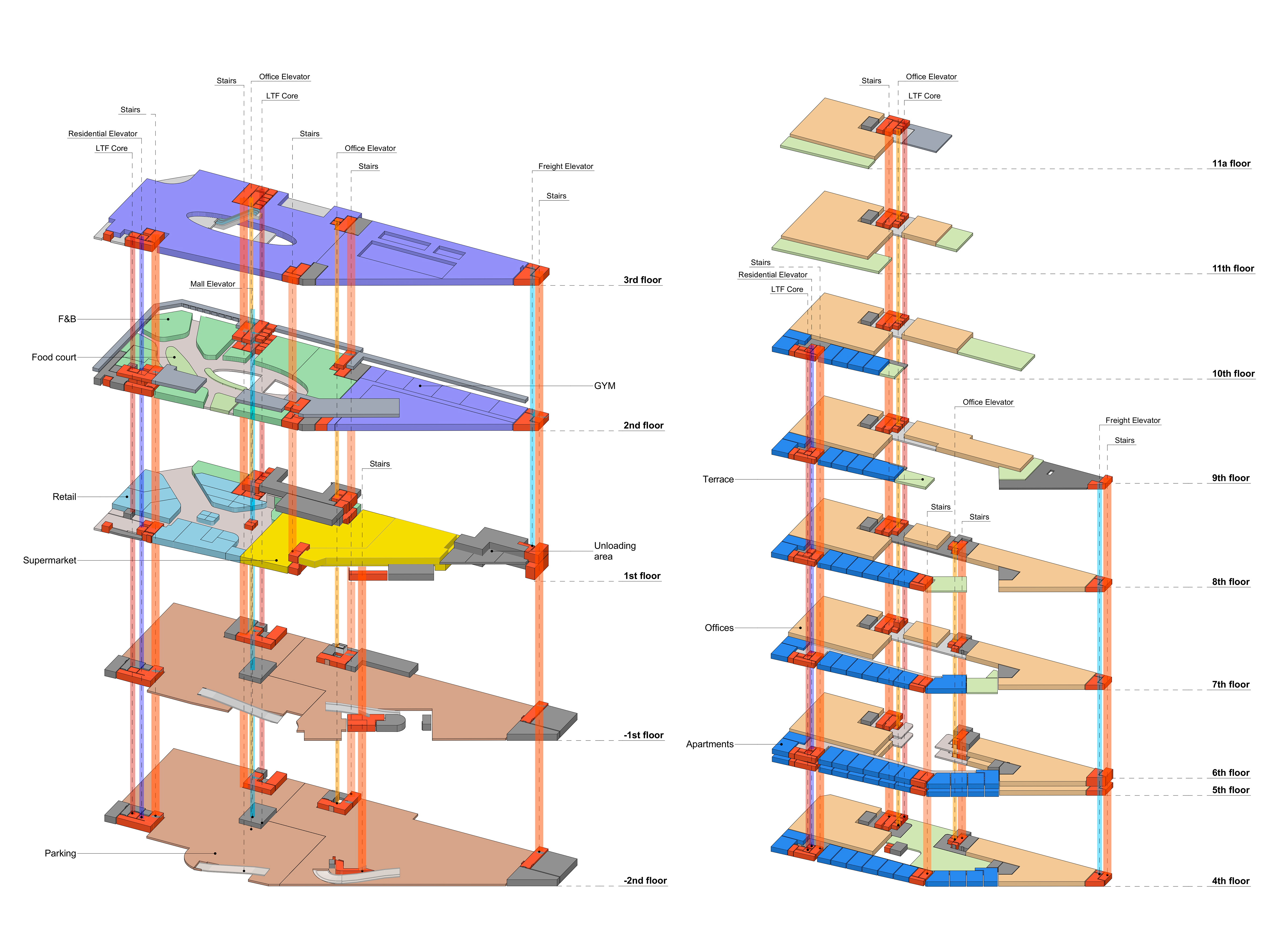
Each function was designed to operate autonomously while maintaining seamless vertical and spatial connectivity within the overall building system.
Strategic Significance

SvitloMall acts as a catalyst for the transformation of a transitional urban corridor, a zone defined by the intersection of residential, industrial, and transport infrastructures. The project introduces a new model for compact, self-sufficient mixed-use architecture that enhances both economic efficiency and urban quality.By combining commercial and social functions within one integrated structure, SvitloMall establishes a sustainable balance between private development and public benefit.
Scale & Programme

  • 5+ integrated functions - Retail, Offices, Serviced Apartments, Sports Club & Spa, Food Hall, Usable Rooftop with public access, underground Car Park
  • Offices – 11 250 m²
  • Retail & Food Hall – 3465 m²
  • Sports centre with swimming pools and spa – 3745 m²
  • Serviced Apartments – 3557 m²
  • Underground Car Park – 6518 m² (30 m2 per parking place efficiency)
  • 11 above-ground + 2 underground floors
  • 58% efficiency, including the underground car park
Key Challenges & Solutions Implemented

  • Limited site area along a major transport artery
  • Noise exposure from the road, limited solar insolation, trainline and overhead power lines setback
  • Integration of multiple autonomous functions
  • Need for high efficiency within complex spatial constraints
  • Meet safety and comfort standards for five different uses under one roof
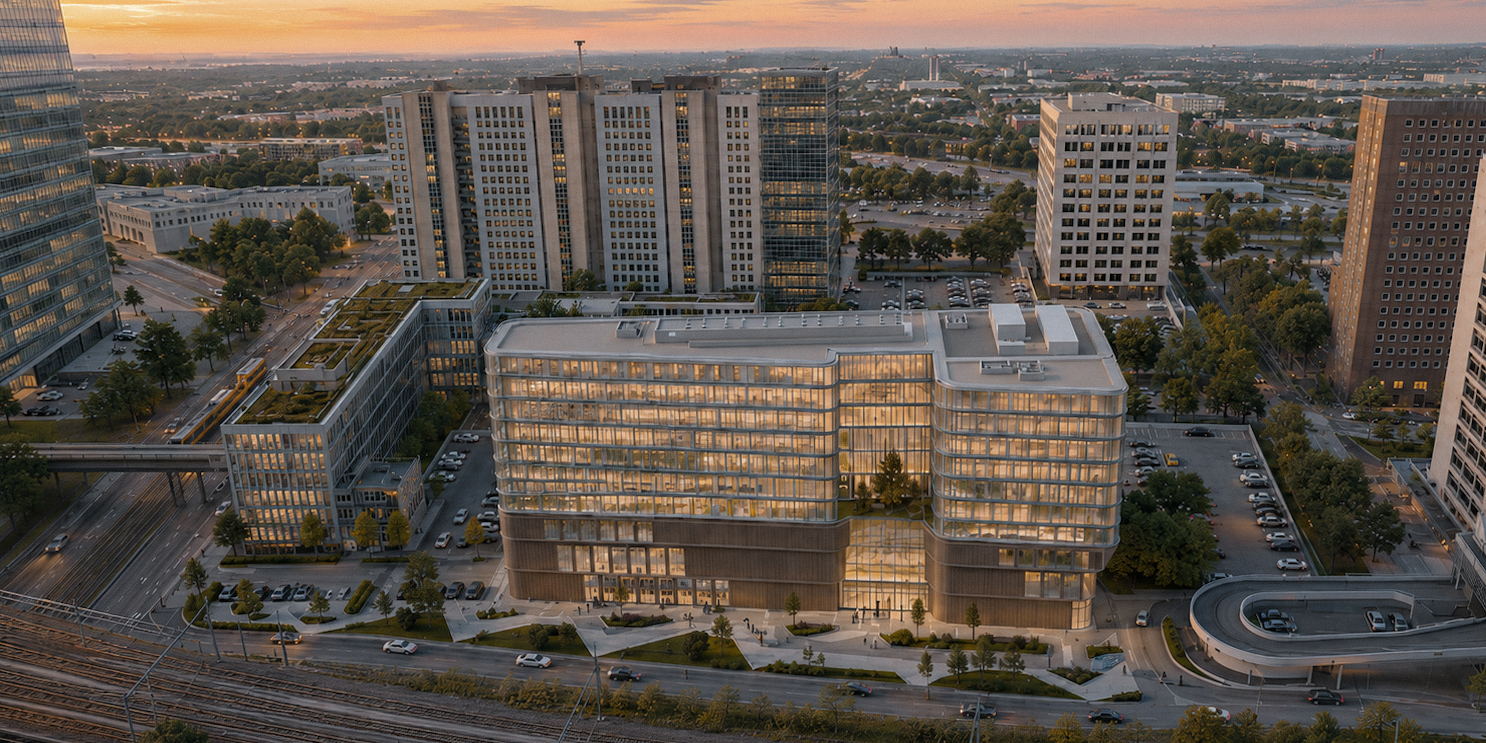
Urban Analysis
Studied surrounding transport, residential, and industrial context to optimise orientation and access.

An in-depth urban analysis was conducted, examining the surrounding transport infrastructure, residential fabric, industrial zones, and existing developments to optimise building orientation, accessibility, and spatial organisation.

Given the limited site area and its highly constrained context — positioned between a heavily trafficked arterial road, a railway corridor, an industrial zone, and an existing residential complex — a thorough assessment of urban planning regulations, setbacks, and spatial limitations was carried out. These constraints became the primary drivers shaping the project’s volumetric composition and spatial configuration.

Acoustic Design
Applied double-skin façades and materials for sound and thermal control.

A detailed acoustic study informed the decision to implement a double-skin façade system. This solution performs a dual function: it effectively shields the office areas from highway noise while simultaneously providing solar protection from southern exposure. As a result, the building achieves enhanced thermal comfort and significantly improved energy efficiency.

Daylight-Driven Design
Optimised residential and office layouts to meet daylight and neighbour requirements.

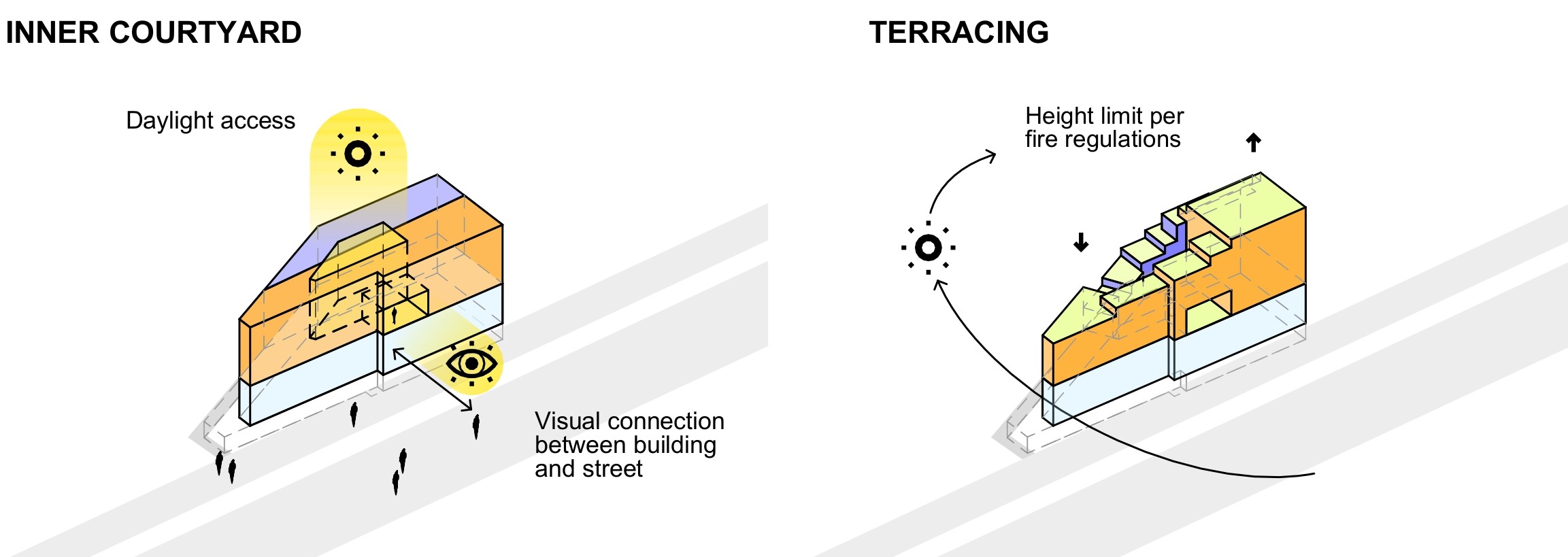
Daylight simulations and solar irradiation studies were conducted for both the neighbouring residential buildings and the proposed layouts. Through iterative optimisation, the final configuration ensures optimal daylight access for the new development while fully preserving daylight availability for adjacent properties.

Functional Zoning
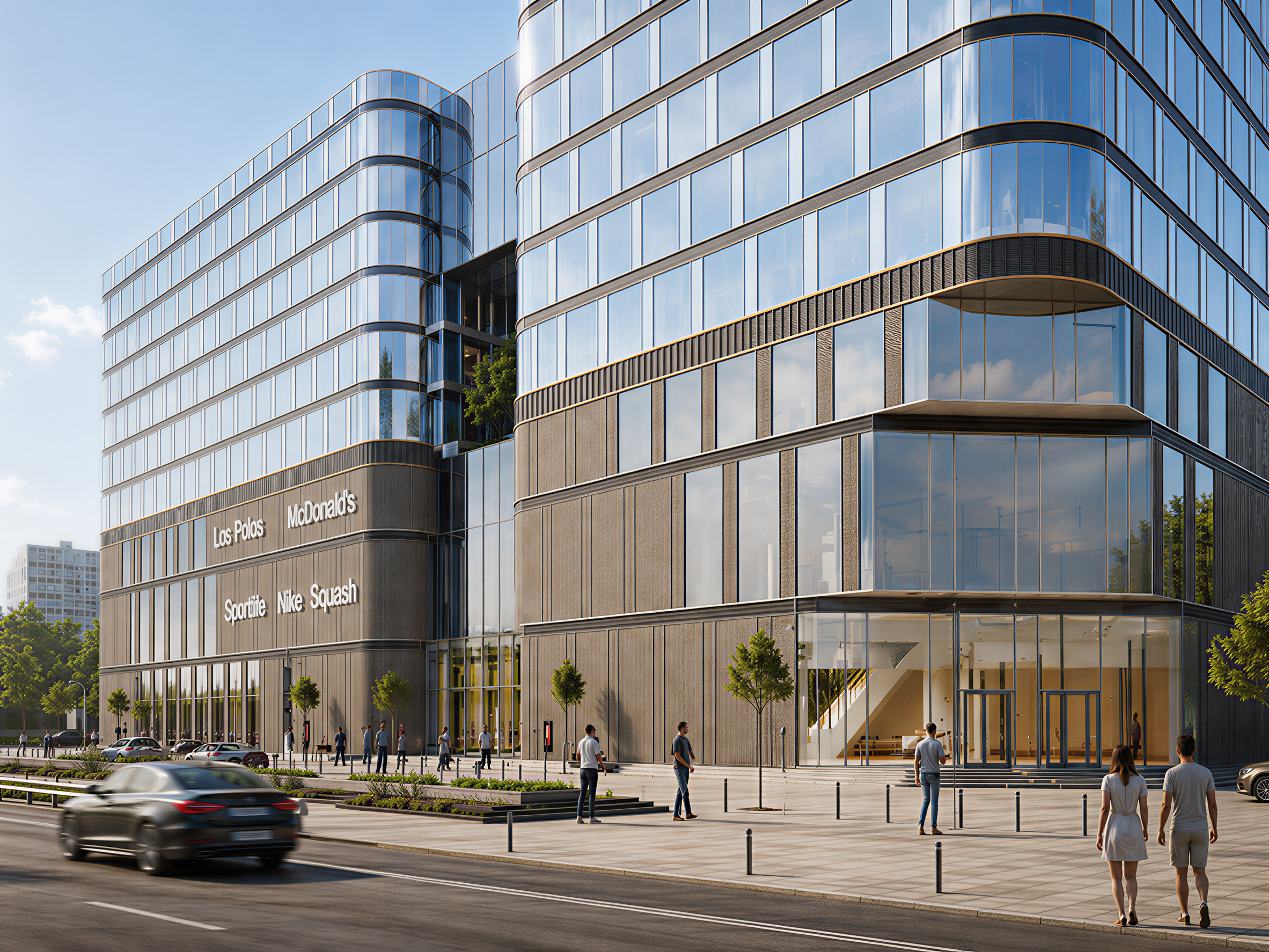
Retail placed on active lower levels; offices, residences, and hotel positioned above.

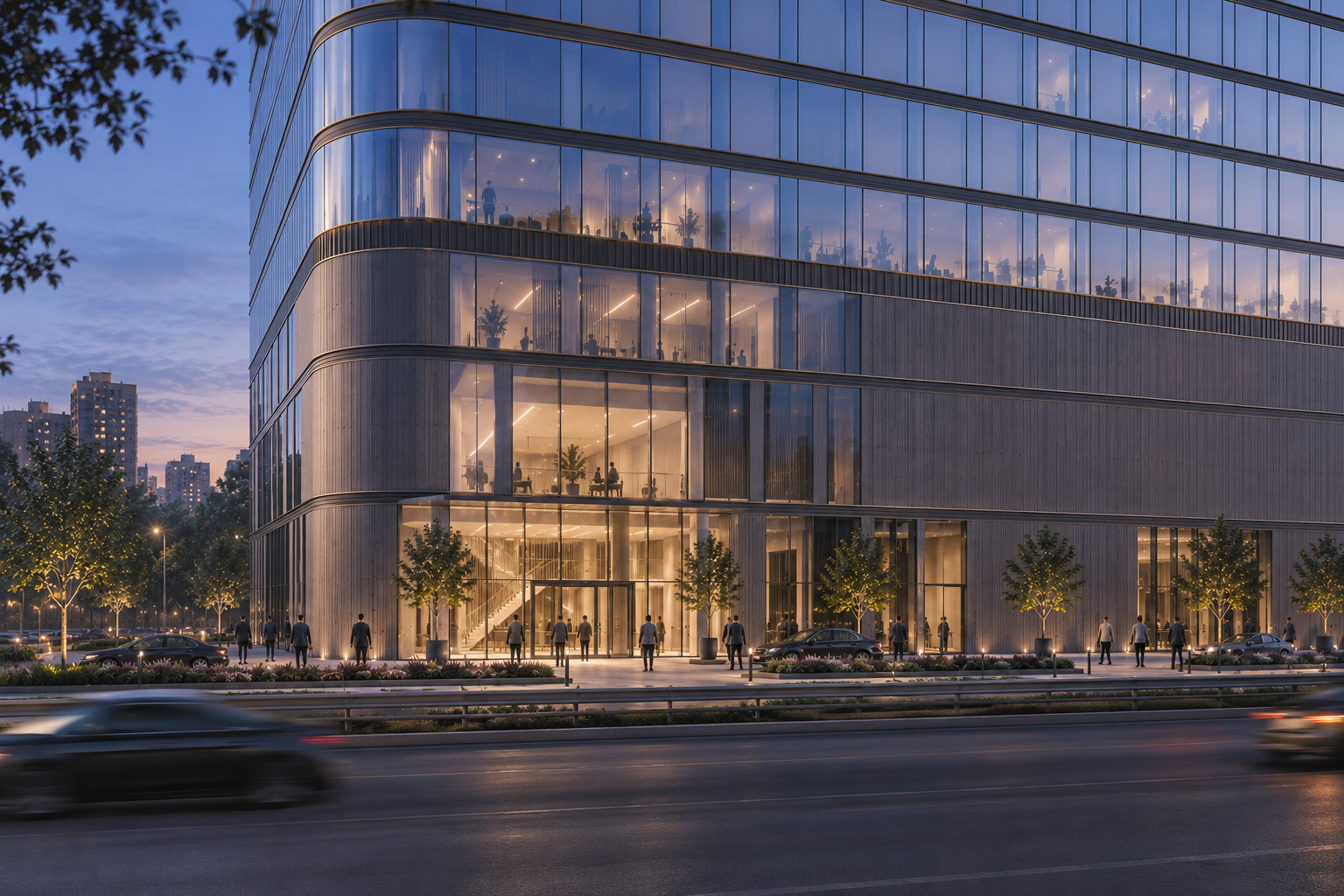
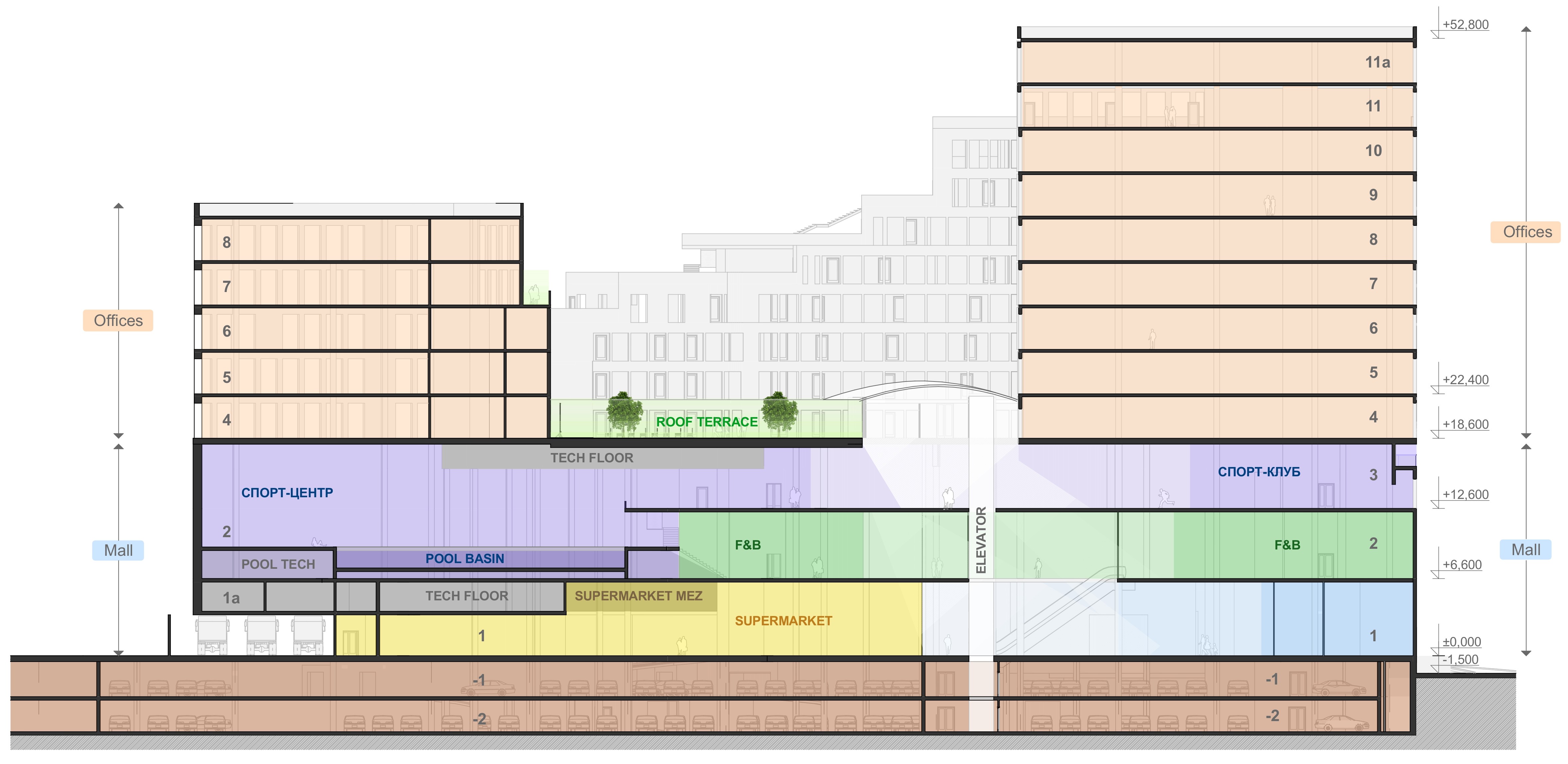
The lower levels accommodate retail spaces with active frontages, creating vibrant public areas and continuous pedestrian flows. Retail galleries also function as transit corridors connecting adjacent programmatic zones, ensuring optimal footfall and commercial viability for tenants.

A food hall with direct access to the internal atrium is positioned on the third level, forming a central social and community hub. Above, the building integrates office spaces and residential apartments, achieving a clear and efficient vertical functional distribution.

Vertical Autonomy
Dedicated lift and stair cores for each function, ensuring independent operation.

To ensure operational efficiency, safety, and functional independence, each programmatic zone is served by dedicated vertical circulation cores, allowing autonomous operation of all functions within the complex.

Structural and Engineering Coordination
Early integration of MEP, HVAC, and structural systems during schematic design.

From the earliest concept stage, structural and engineering consultants were fully integrated into the design process. Early coordination of MEP, HVAC, and structural systems enabled the identification of an optimal structural scheme, precise spatial allocation for technical areas, and preliminary load assessment. This integrated approach significantly minimised design revisions during later, more detailed and cost-intensive stages.м

Facade Solutions
Three façade concepts using glass, corten, marble, and stone to create contrast and rhythm.

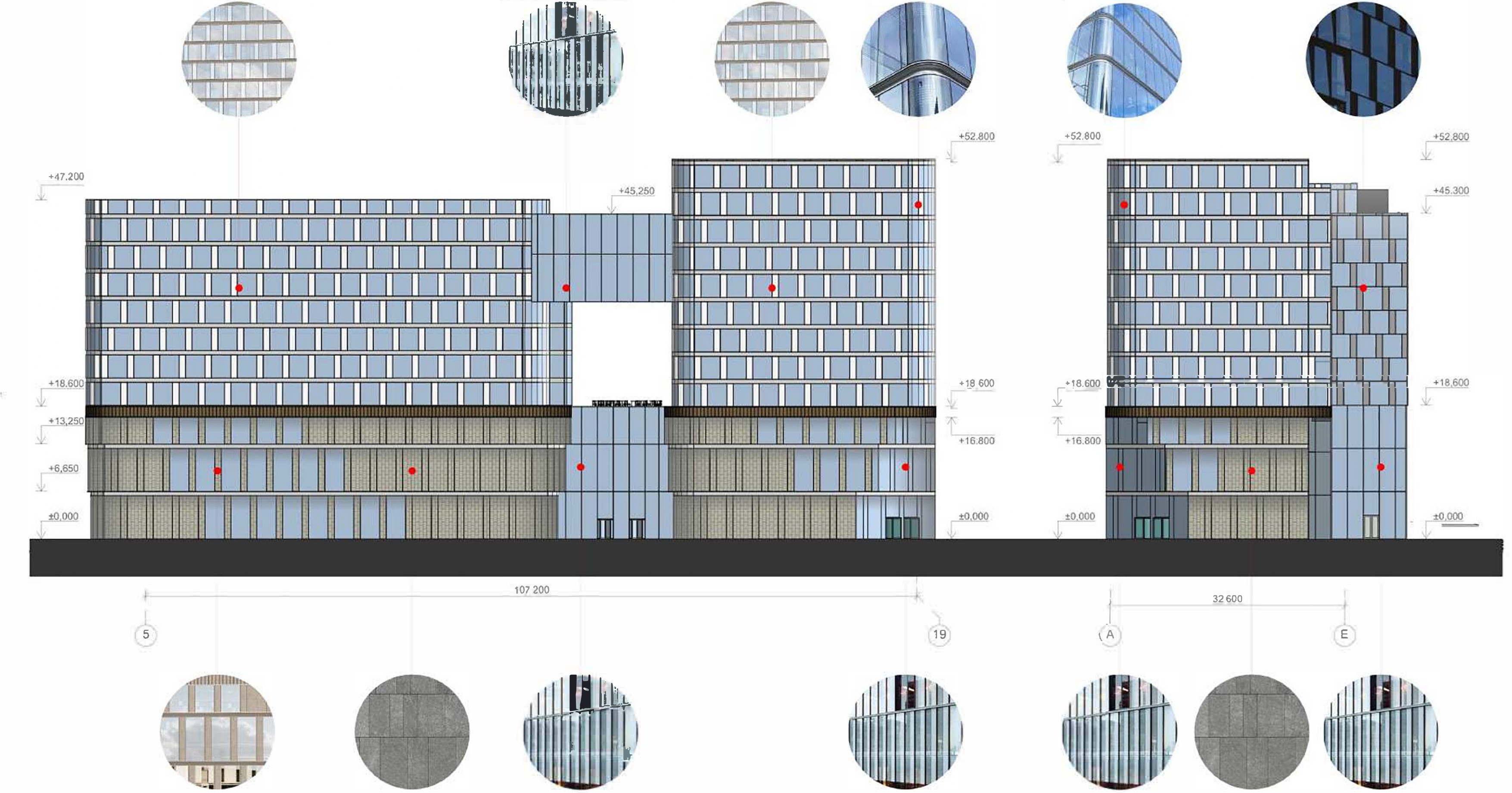
Three façade concepts were developed using glass, corten steel, marble, and natural stone, creating a refined interplay of transparency and solidity. The contrasting material palette establishes architectural rhythm, enhances depth and texture, and forms a distinctive identity that responds both to the industrial surroundings and the residential character of the context.

Activated Rooftop and Internal Atrium
Introduced internal atrium and rooftop terraces for daylight, greenery, and community use.

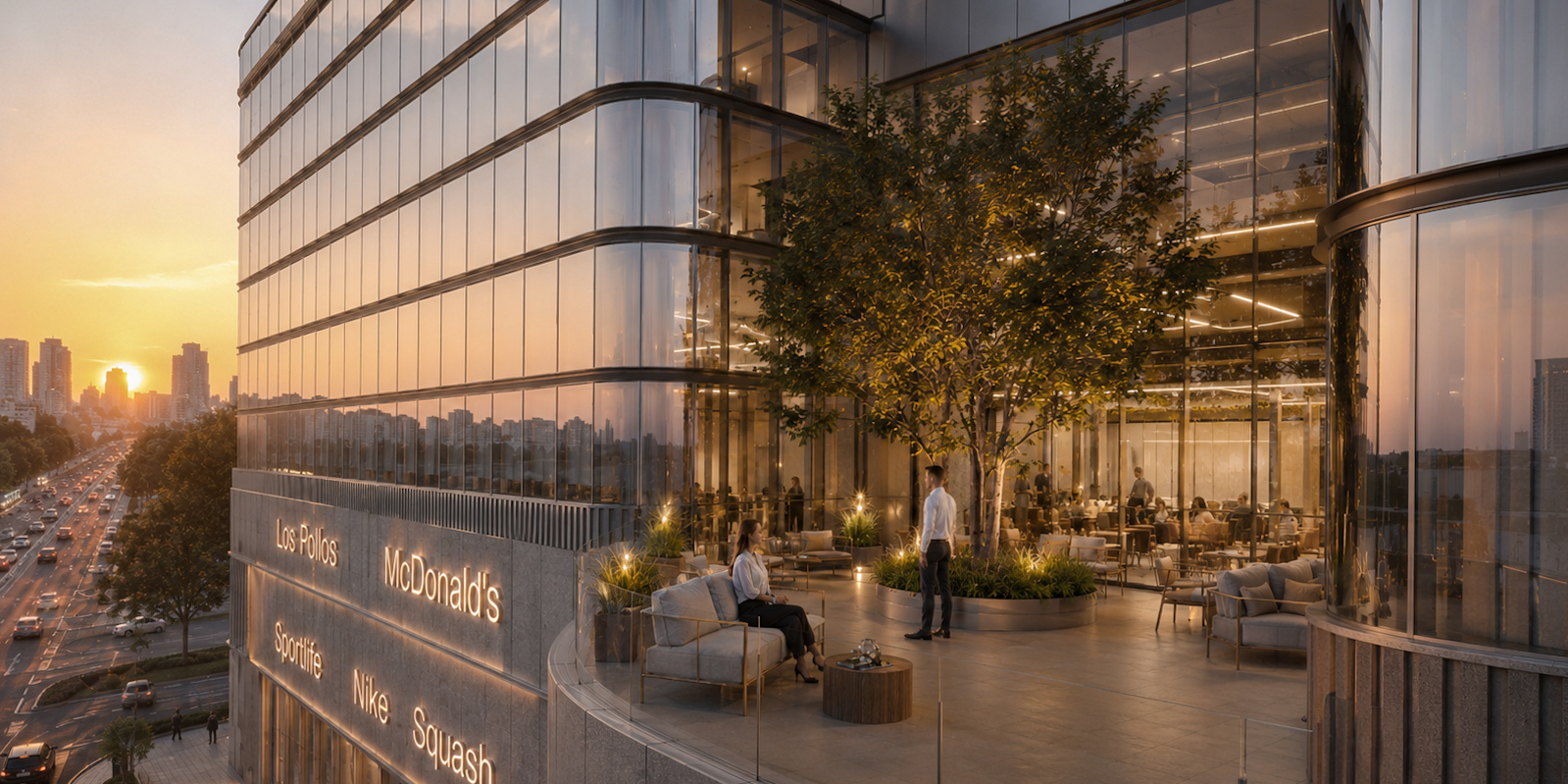
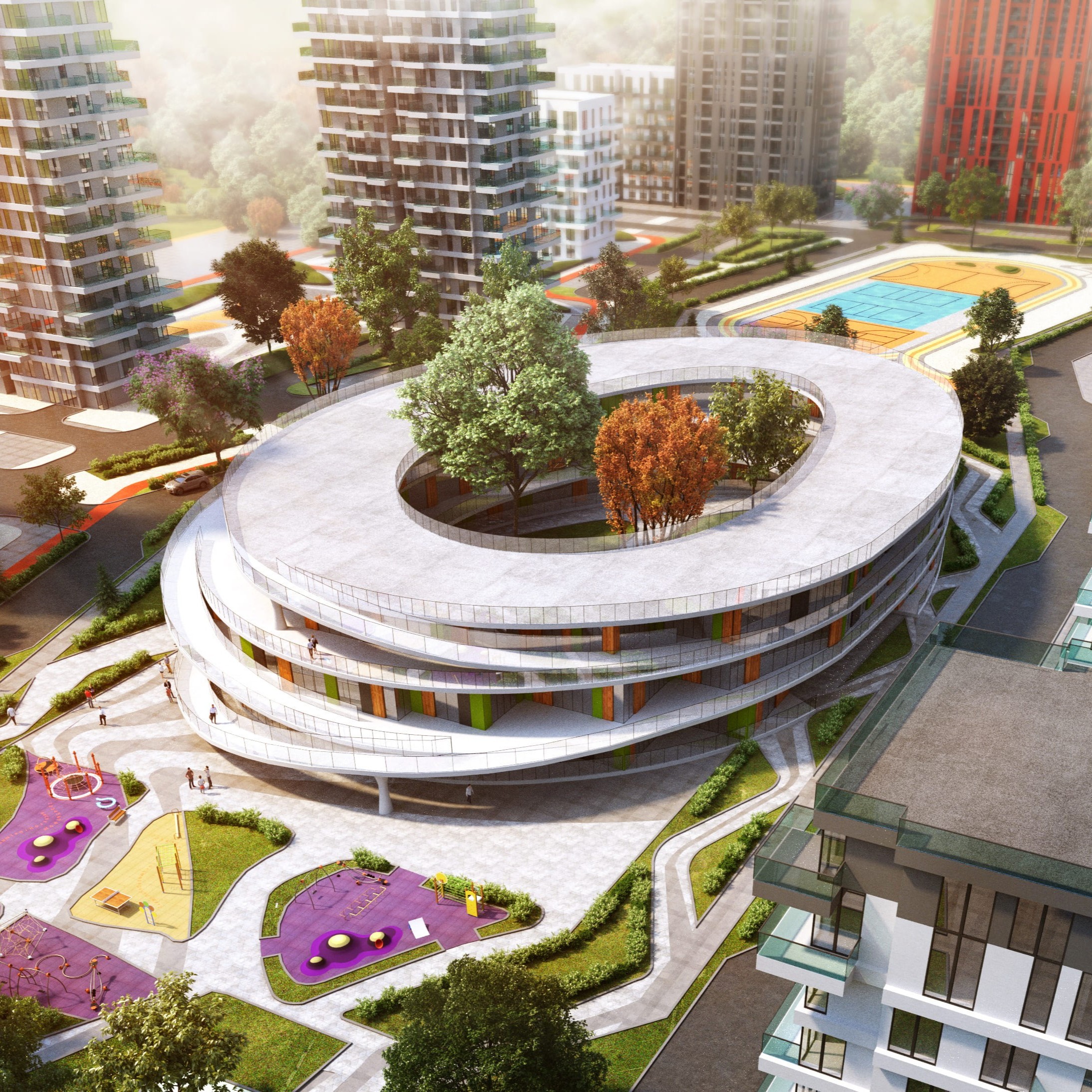
An internal atrium and activated rooftop terraces were introduced to enhance daylight penetration, natural ventilation, greenery integration, and social interaction. These spaces support public events, informal gatherings, and community activities, reinforcing the project’s environmental and social sustainability.

Parking Optimisation
Multiple design scenarios tested to maximise capacity and circulation efficiency.

Multiple underground parking layout scenarios were tested to maximise capacity and circulation efficiency. The selected solution achieved a highly efficient ratio of below 35 sqm per parking space, optimising land use while maintaining comfortable vehicle manoeuvrability and safety standards.

Integrated Collaboration
Coordinated architecture, engineering, and client teams to align technical and aesthetic objectives.

Although developed at the early concept stage, the project incorporated design input from engineering, structural, leasing, facility management, and marketing teams. This multidisciplinary and integrated collaboration ensured alignment between architectural ambition, technical feasibility, operational efficiency, and commercial strategy. In practice, this methodology has proven highly effective in minimising late-stage design changes and reducing overall development risks and costs.

Economic Impact

The project creates a multifunctional ecosystem that stimulates economic activity and community development.
By combining retail, offices, hospitality, and residential functions within a single structure, it drives efficient land use, job creation, and sustainable revenue growth.

Through smart integration of design, engineering, and operational requirements, the complex establishes a self-sustaining hub of uses that serves its residents and which serves its residents and those in close proximity, creating a convenient urban attraction point and providing the services and amenities of a central city facility, without the need to commute.
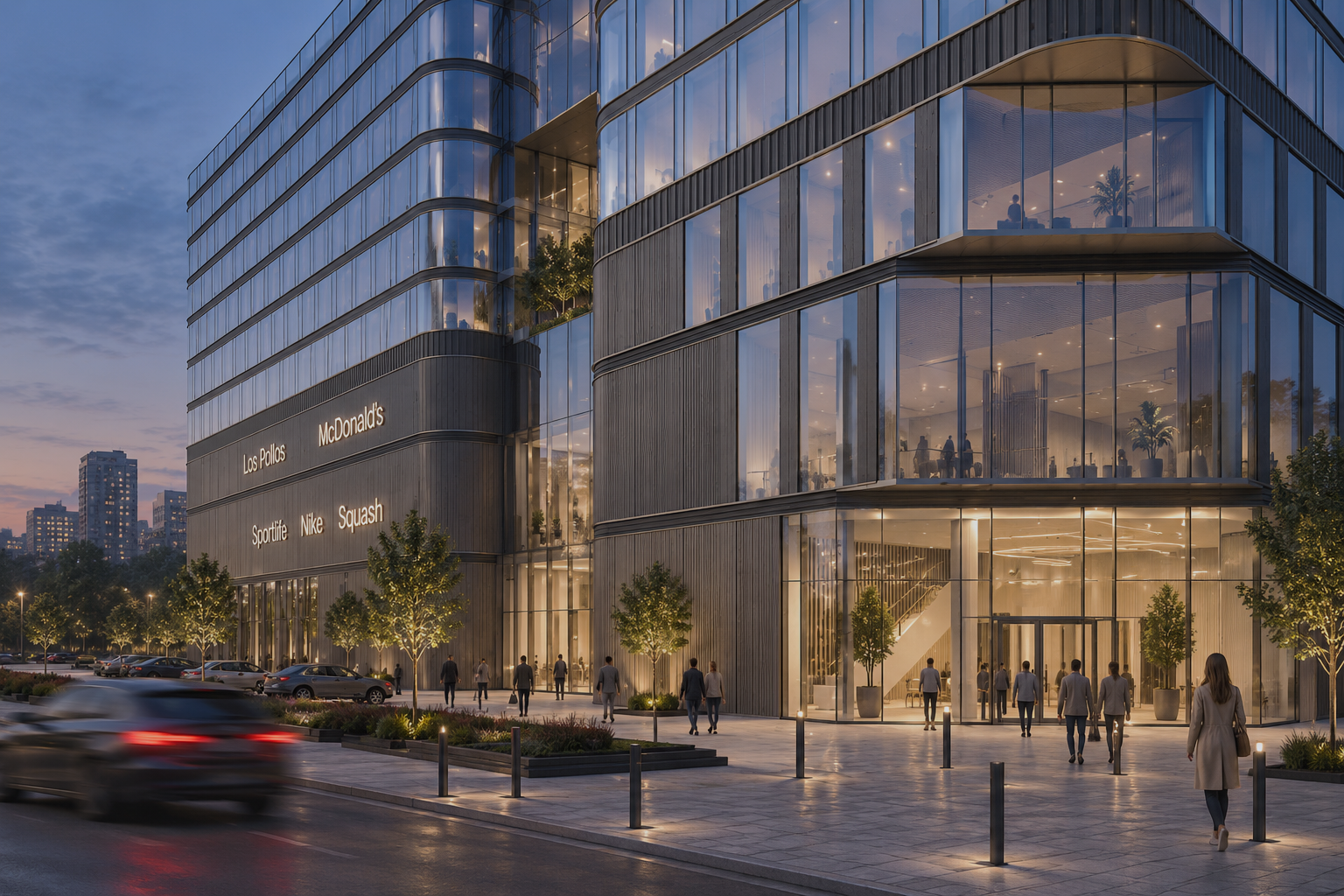
Result

SvitloMall delivers a fully functional and efficient mixed-use environment that operates as a self-contained ecosystem. It integrates retail, residential, office, and leisure functions while maintaining spatial comfort, technical precision, and visual harmony.The building’s form, façade articulation, and rooftop landscape contribute to the urban identity of its surrounding district - transforming a transitional area into a vibrant destination for work, living, and recreation.

SvitloMall exemplifies the new generation of mixed-use architecture - compact, efficient, and human-centered. Through integrated planning, environmental analysis, and multidisciplinary coordination, the project redefines how architecture can merge functionality, aesthetics, and sustainability within a dense urban context.

Get Your Express Architectural Analysis

Gain a professional, expert-led evaluation of your project that reveals opportunities for improvement, highlights potential risks, and provides clear recommendations
Request Analysis
Ask questions
We use cookies
Accept
Close