.png)
Wyndham Garden Bucharest Airport Hotel

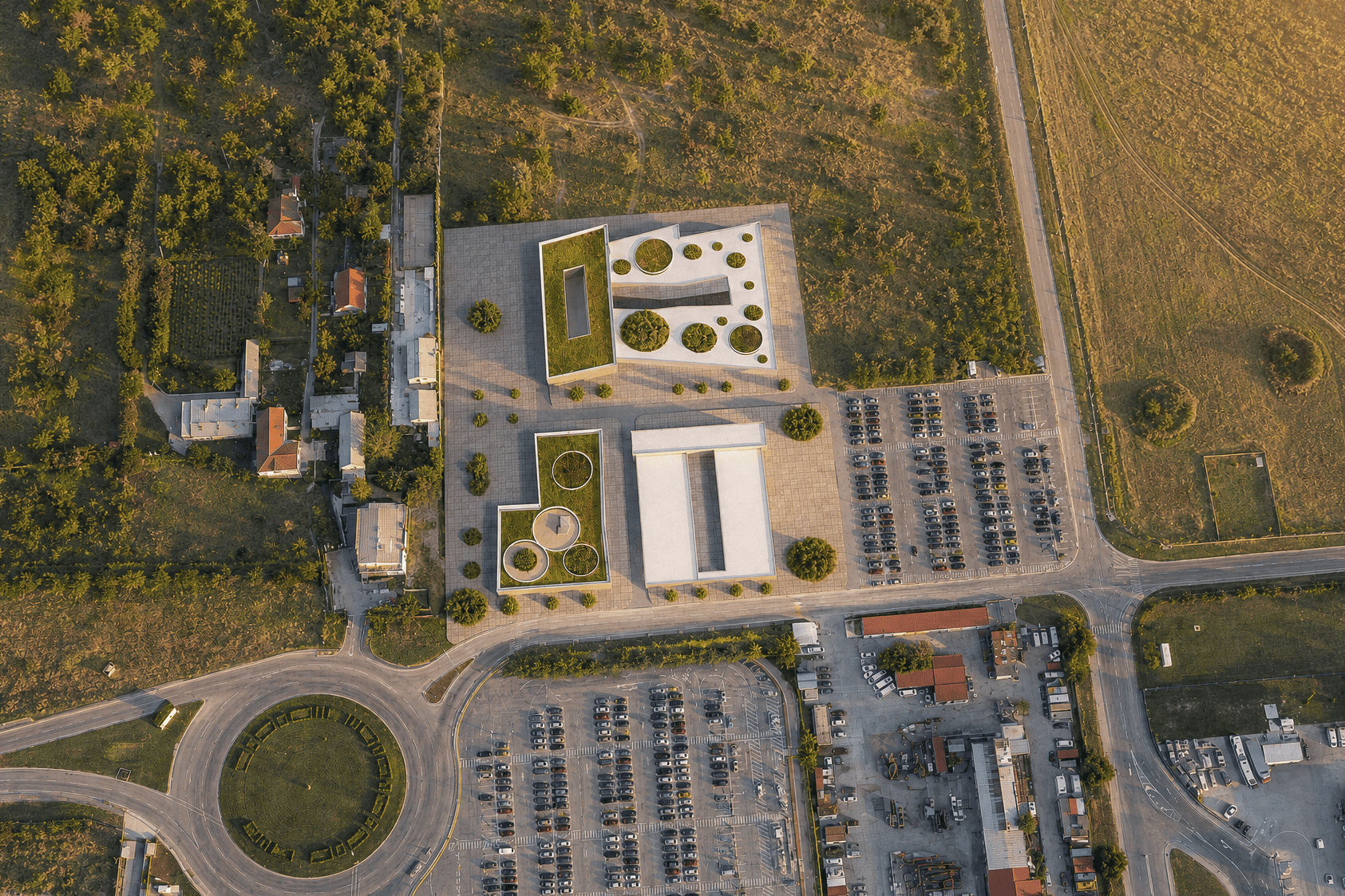
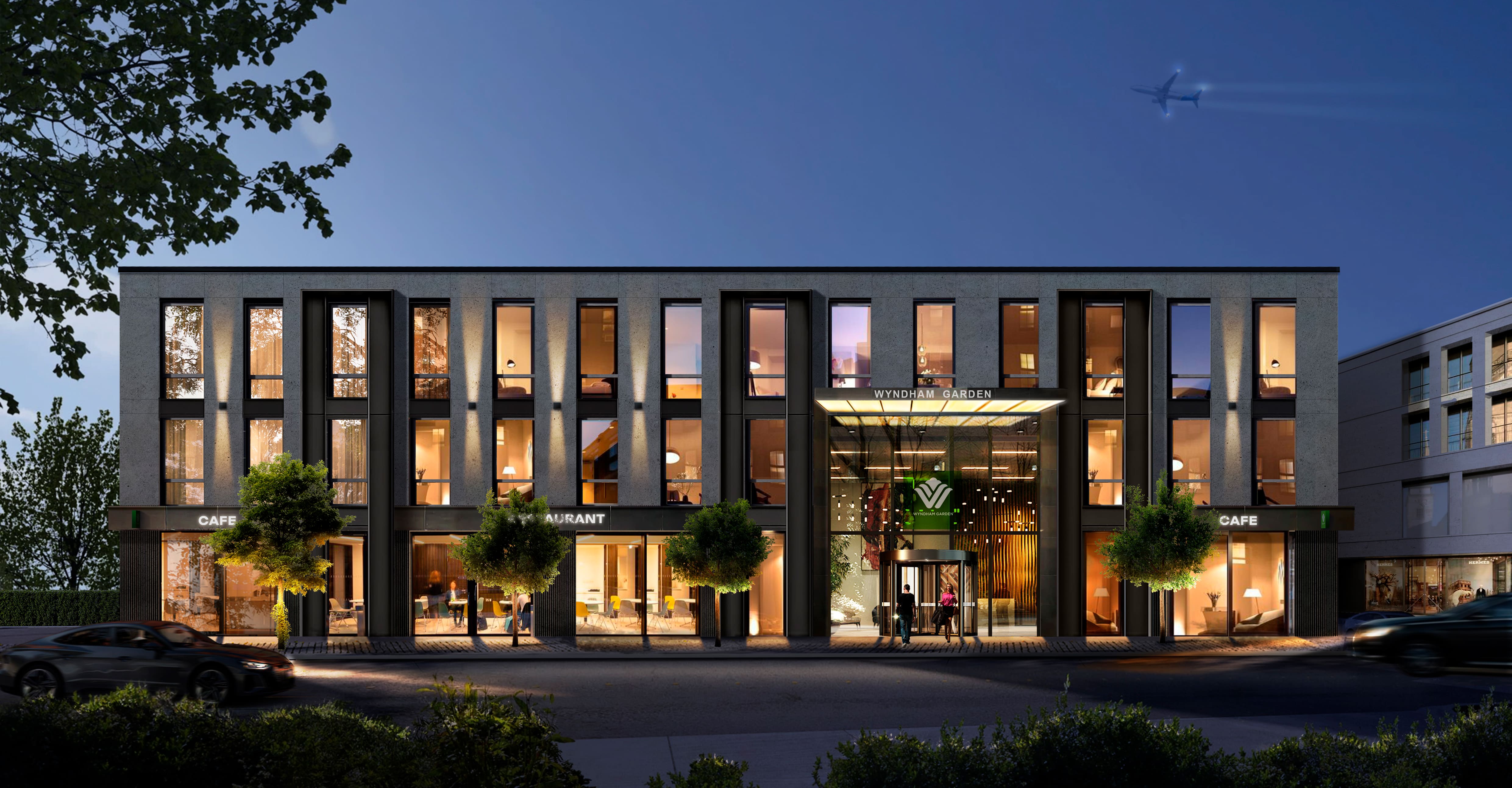
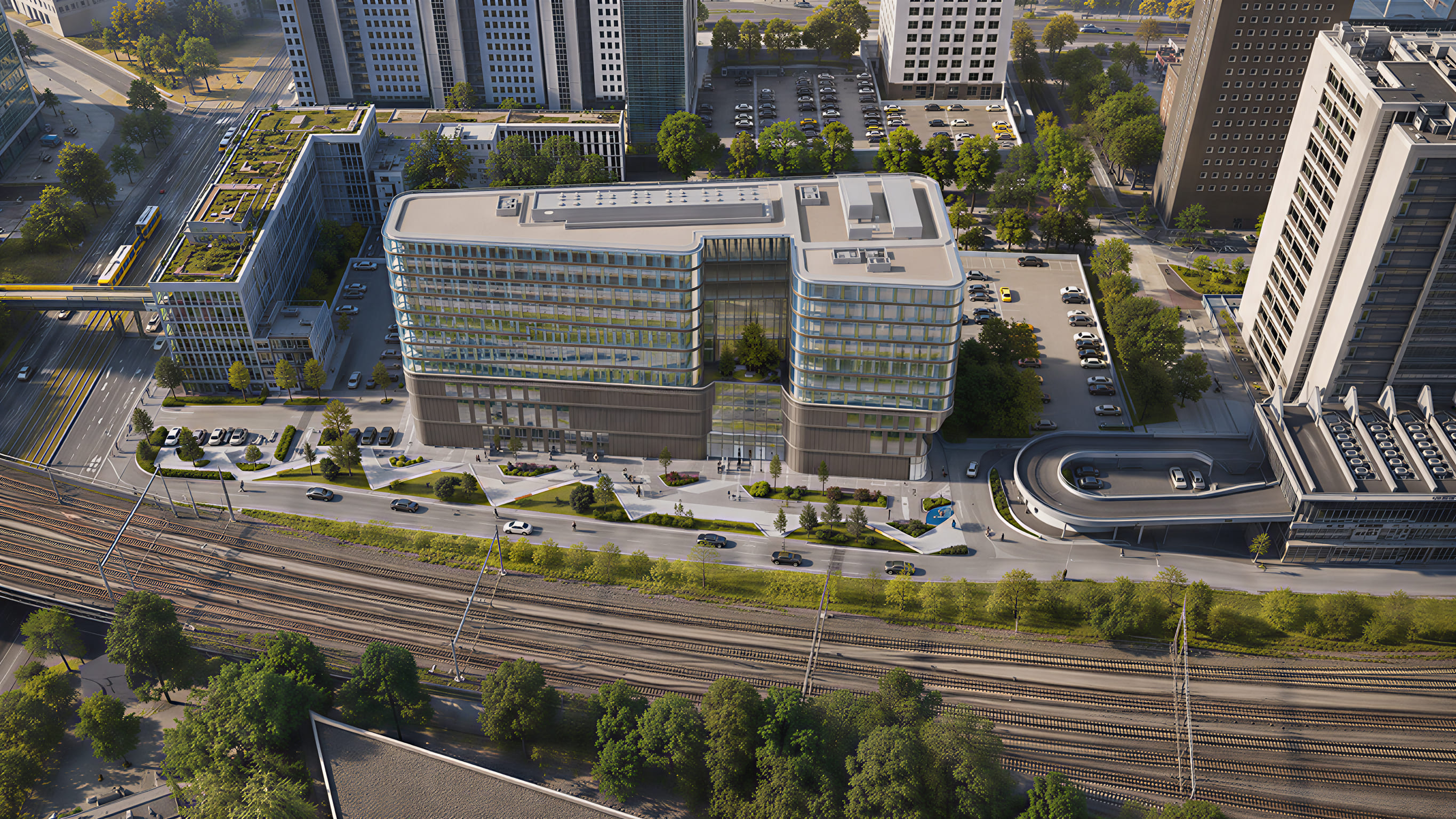
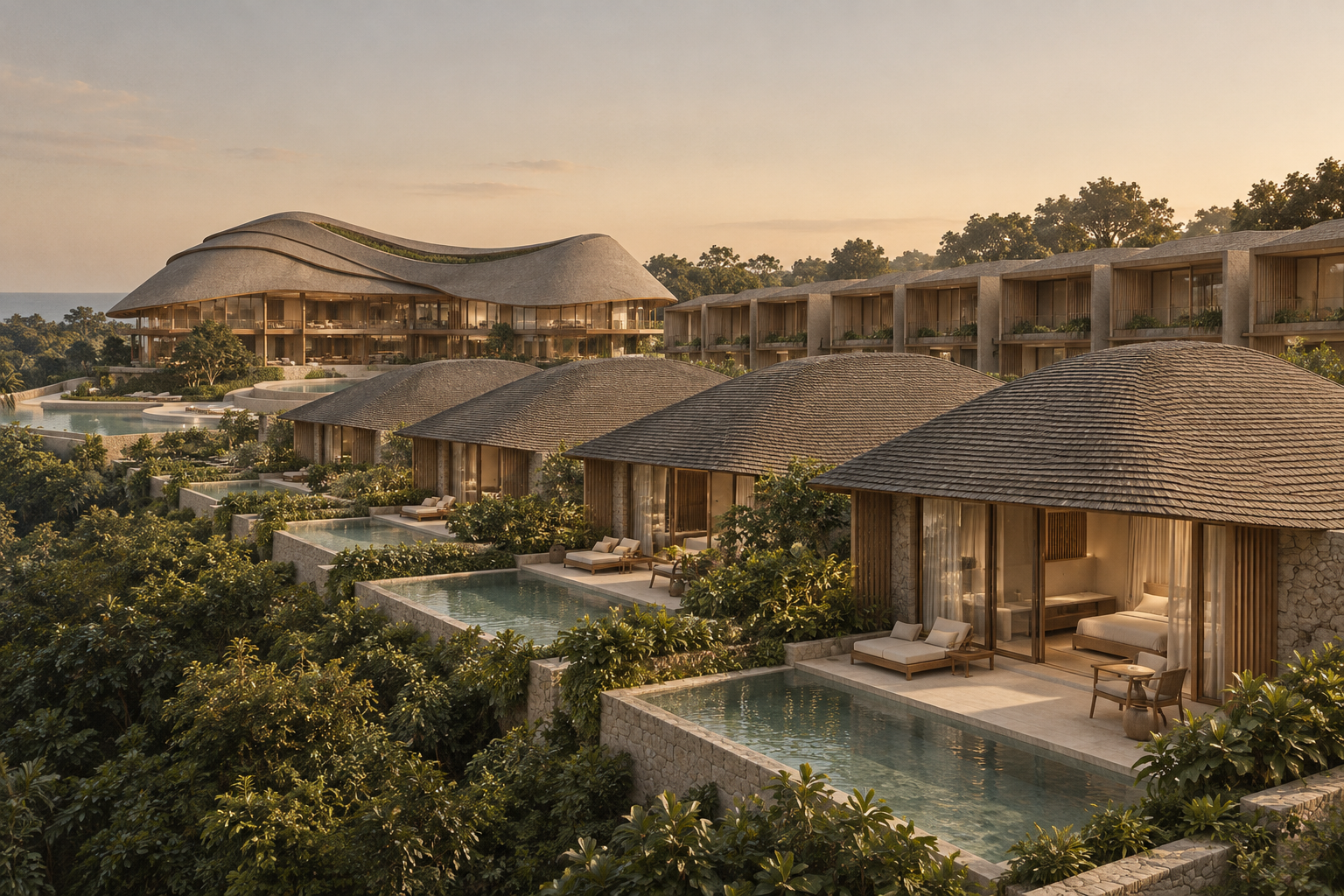
Two-building hotel next to Bucharest Airport, designed to fit a dense programme into a compact footprint. Accommodation, public spaces, and service areas are organized into a clear and efficient structure.
Project Overview
The project is composed of two volumes arranged to define a shared central space that organises movement across the site.
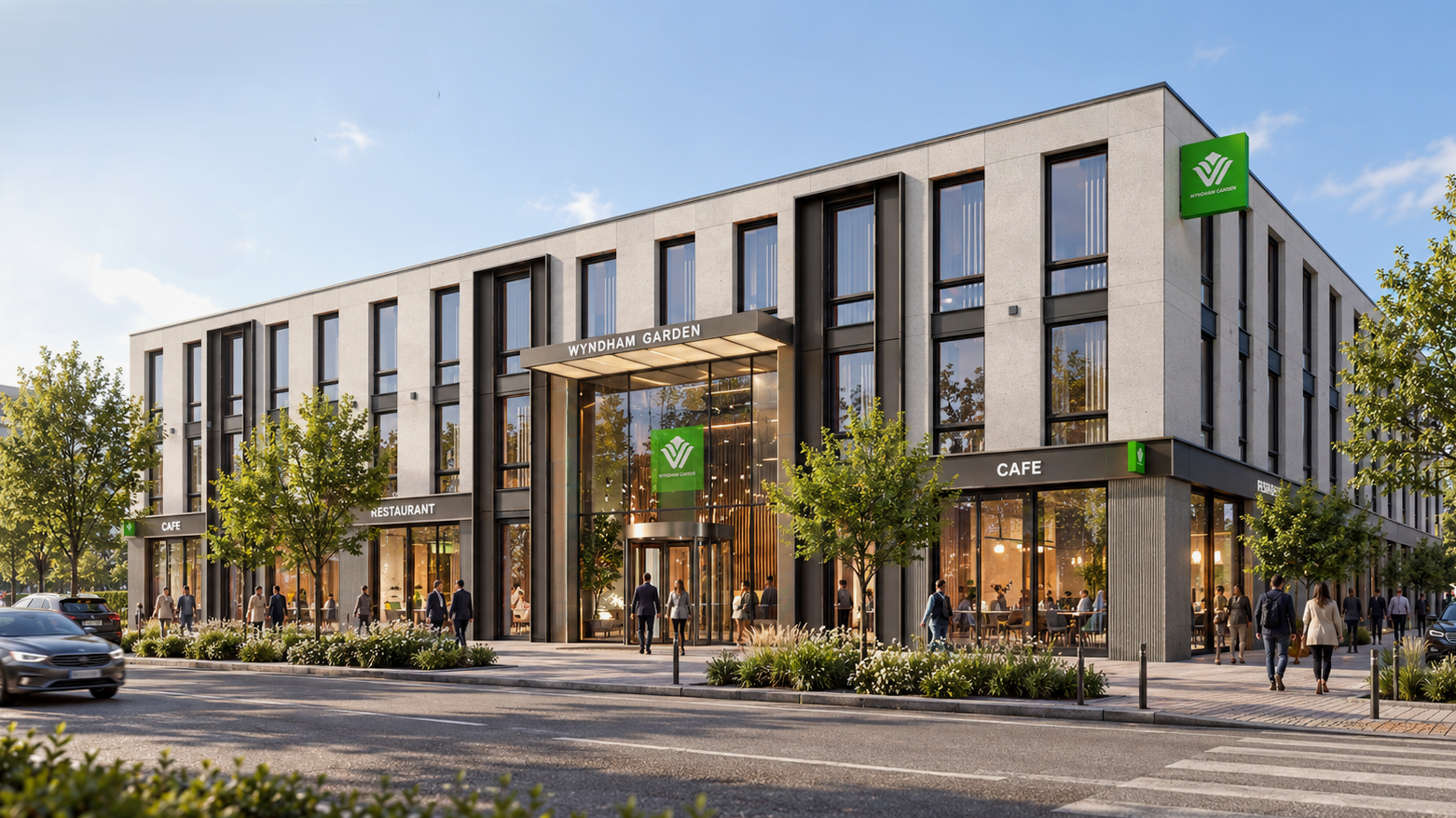
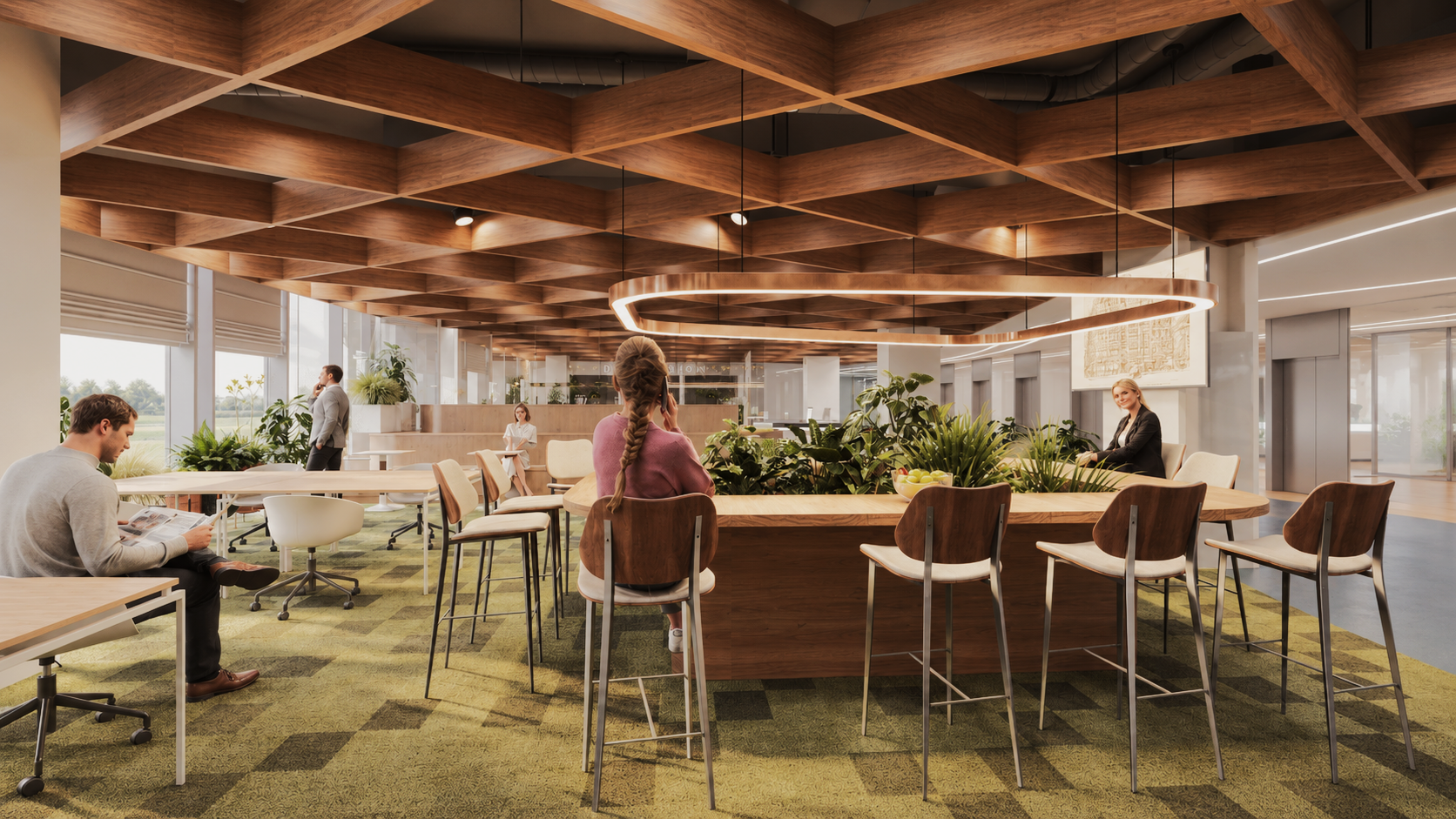
Both buildings accommodate a mix of functions, including guest rooms and public amenities. Restaurant areas, lounges, conference spaces, and wellness facilities are distributed across the complex, allowing the programme to unfold more fluidly rather than being confined to a single volume.
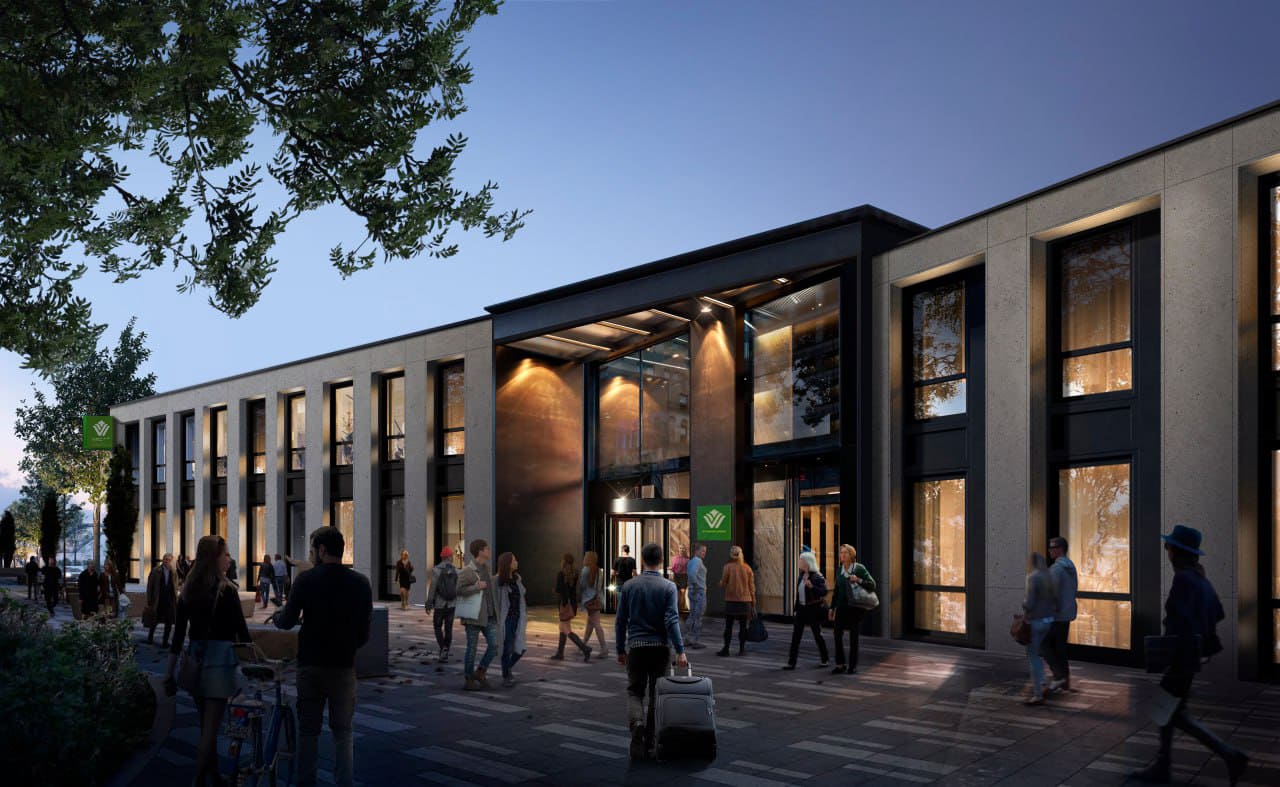
At ground level, the buildings open toward the central space, where arrival, circulation, and short-term activities naturally overlap. Upper floors follow the logic of the room layout, creating a consistent rhythm and a calm atmosphere throughout the buildings.
.jpg)

.jpg)
Urban Significance
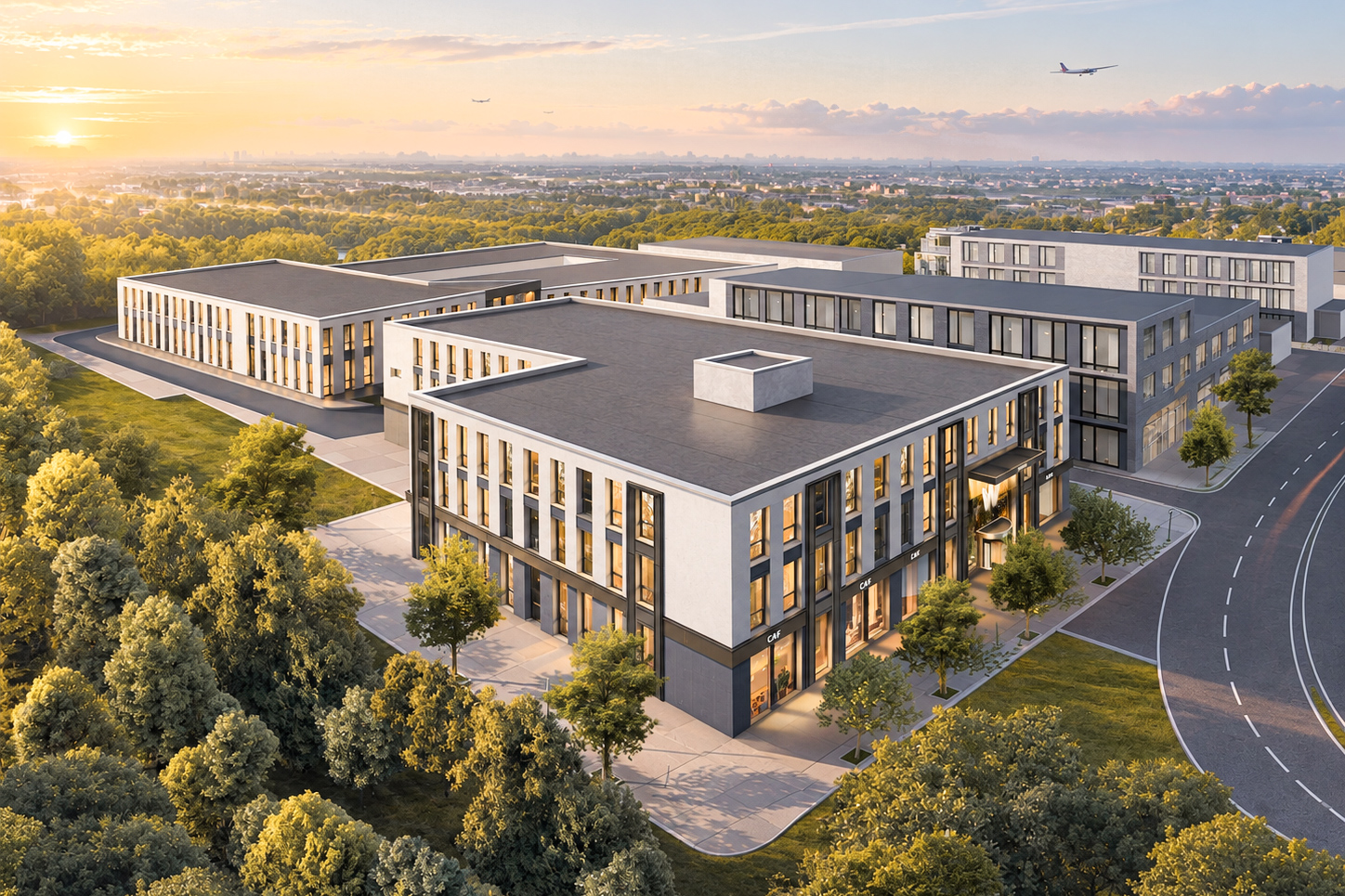
The hotel is positioned in direct proximity to Henri Coandă International Airport, within a context defined by constant movement and a high turnover of visitors.
Location shapes the character of the project from the outset. The building responds to the rhythms of transit, where the need for clarity, and comfort become essential. The programme reflects this condition, accommodating short stays, business travel and stopovers between flights.
Wyndham Garden Bucharest Airport Hotel becomes part of a continuously active urban strip shaped by infrastructure and. Its presence aligns with the ongoing development of the area, where hospitality is closely tied to passenger flow and the dynamics of air travel.
.jpg)
.jpg)
.jpg)
Scale & Programme
%20(1).jpg)
Result
Wyndham Garden Bucharest Airport Hotel gives architectural form to the pace of air travel. Conceived for short stays and constant movement, the project brings clarity, comfort, and a sense of calm to one of the city’s most transient environments. Its spatial organisation supports intuitive use, allowing guests to move effortlessly through arrival and stay. The programme accommodates both everyday hospitality and business activity, maintaining a steady rhythm throughout the day.
The project explores how an airport hotel can move beyond pure functionality and become a well-structured environment for different modes of stay. By combining accommodation, public spaces, and conference use, it responds to the varied rhythms of travel while maintaining consistency in everyday operation.
Get Your Express Architectural Analysis

Proven Results. Featured Work.
-p-2000.jpg)
.svg)
.png)


.svg)


.png)
Fill in the form below and our team will get back to you shortly.
.svg)