.png)
Zvonařka Shopping Centre and Bus Station

An integrated development concept that repositions a bus station as part of a mixed-use urban system.
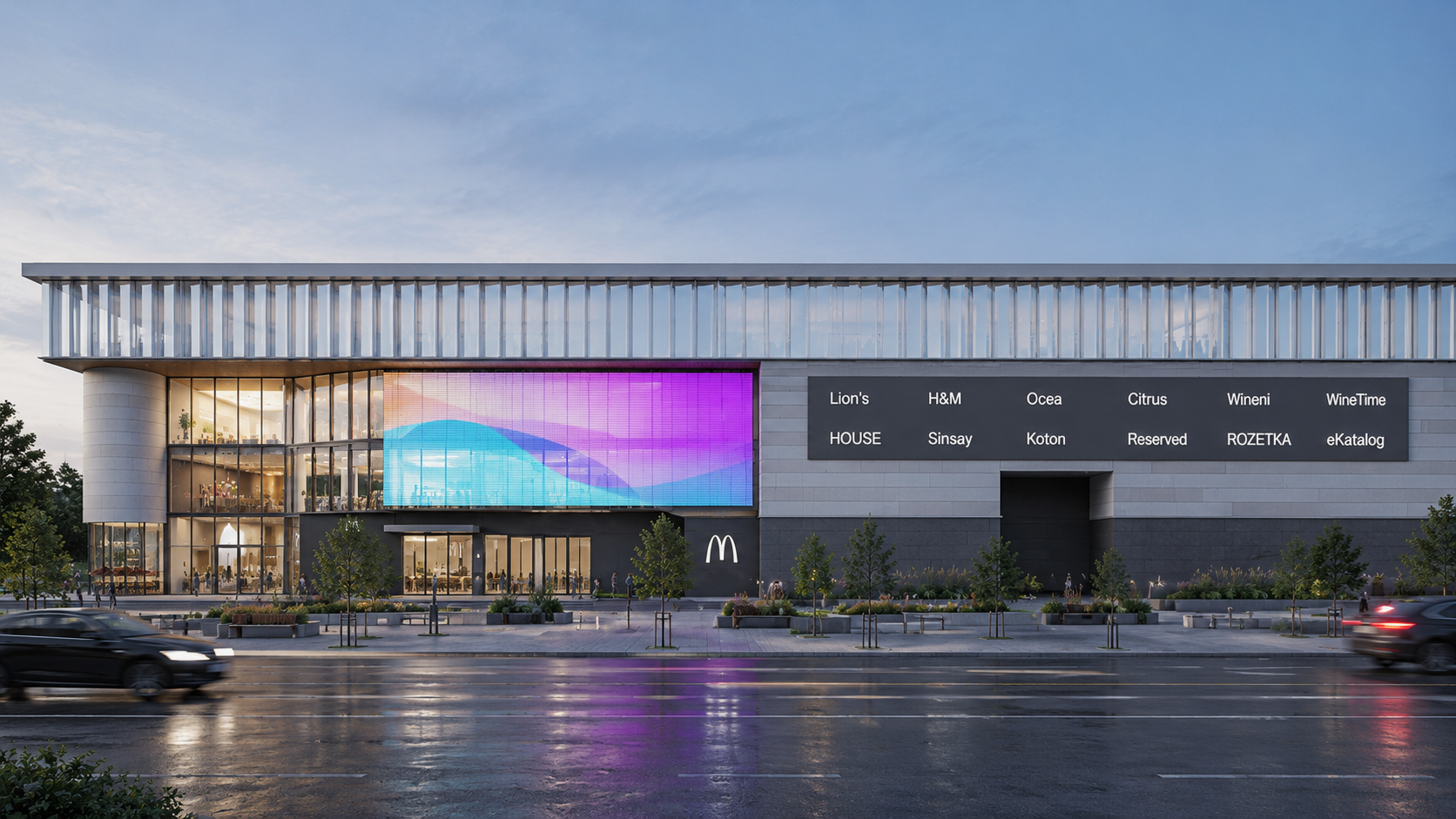
The project combines transport infrastructure, retail, and public space into a single spatial and commercial framework, where passenger flows become a driver of activity and value.
Project Overview
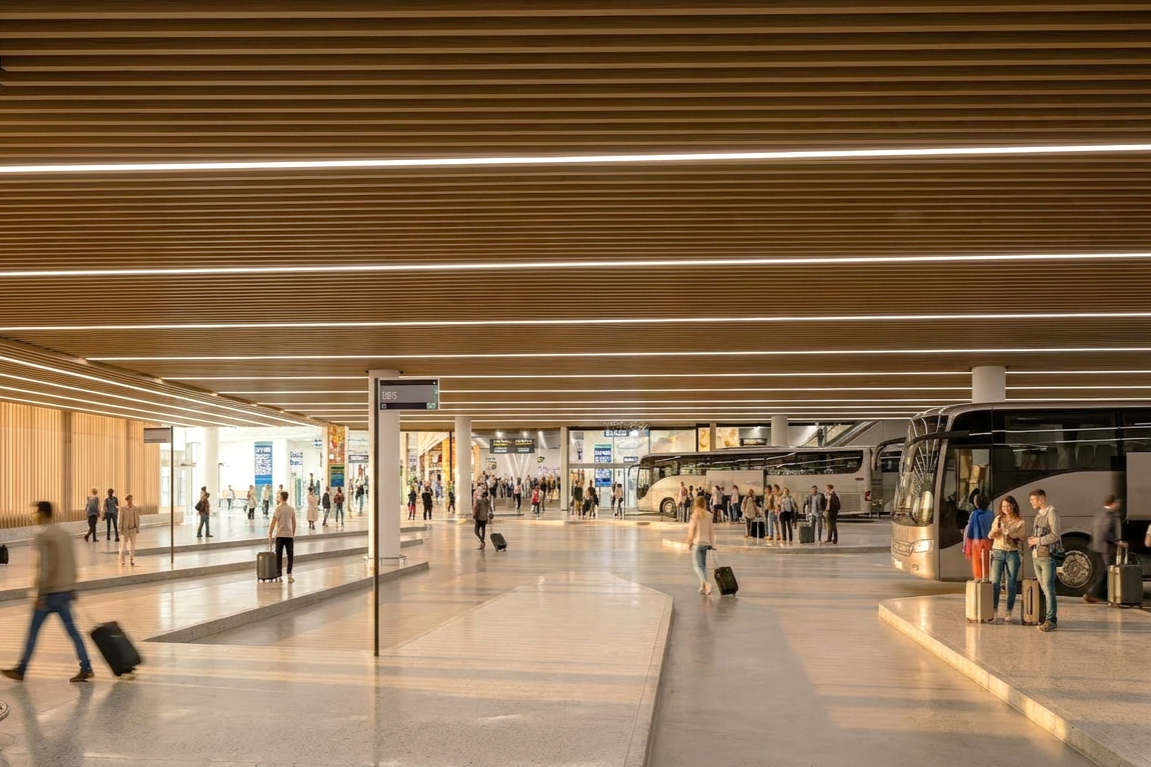
Zvonařka is organized as a transport-led development where infrastructure and commercial functions are closely interlinked.
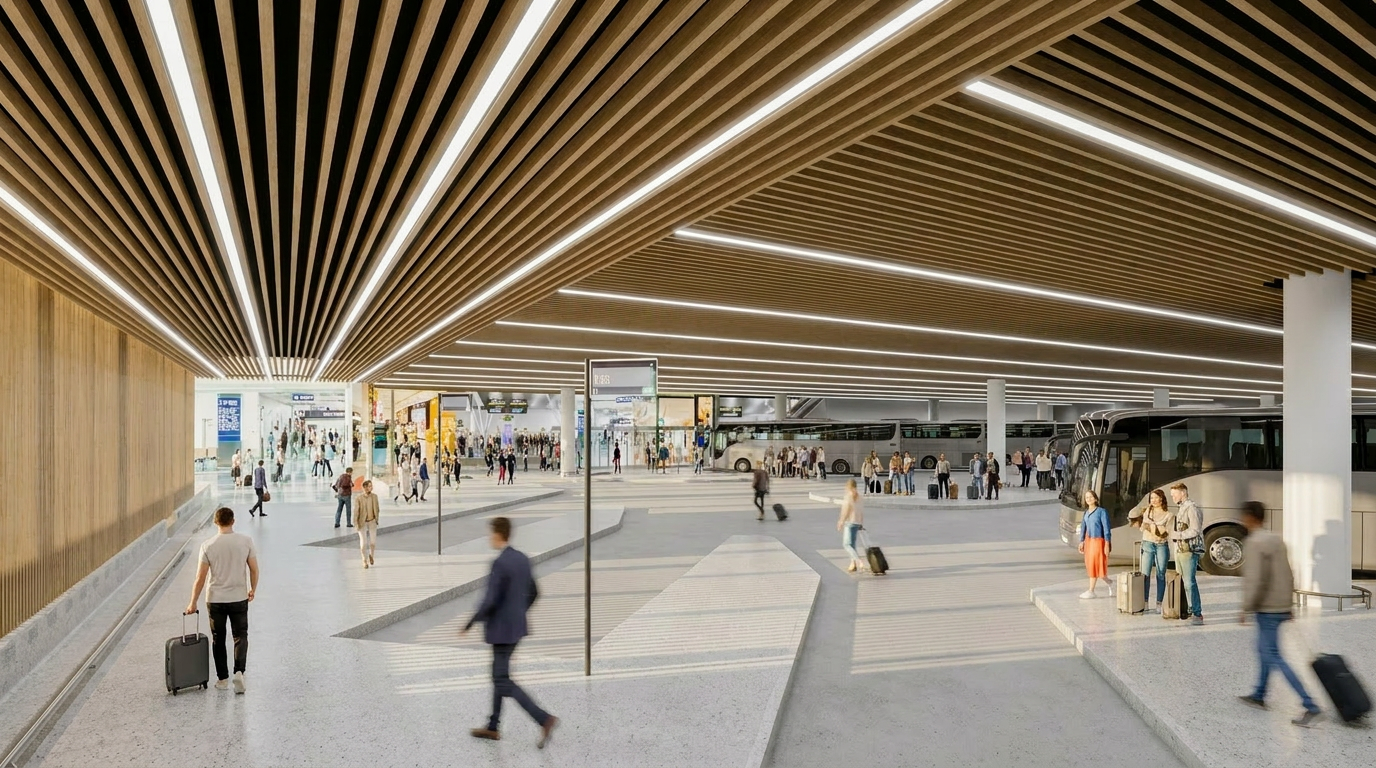
The bus station forms the operational base of the project and anchors the lower levels. Above, retail and public areas are arranged to capture and redistribute movement across the building.
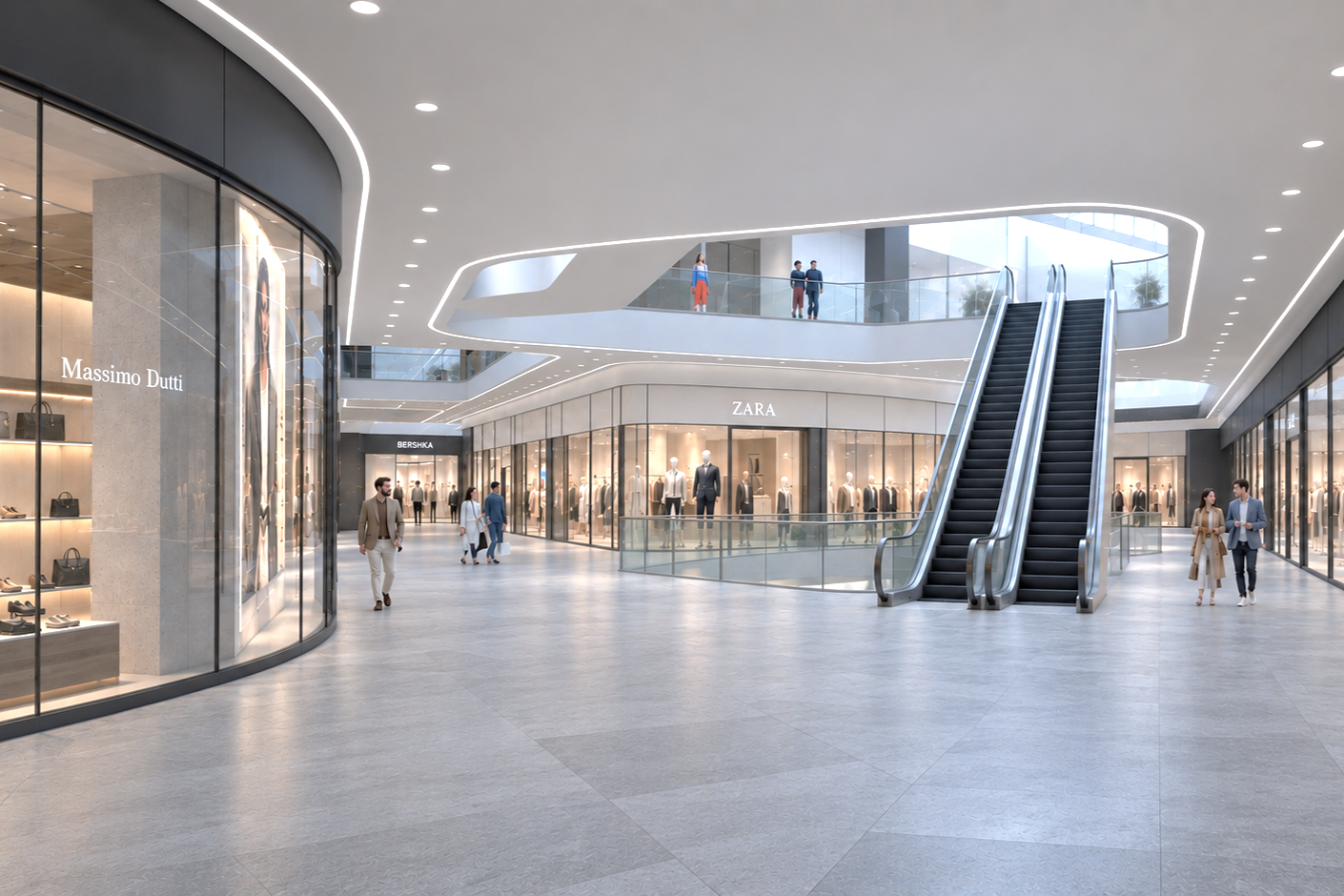
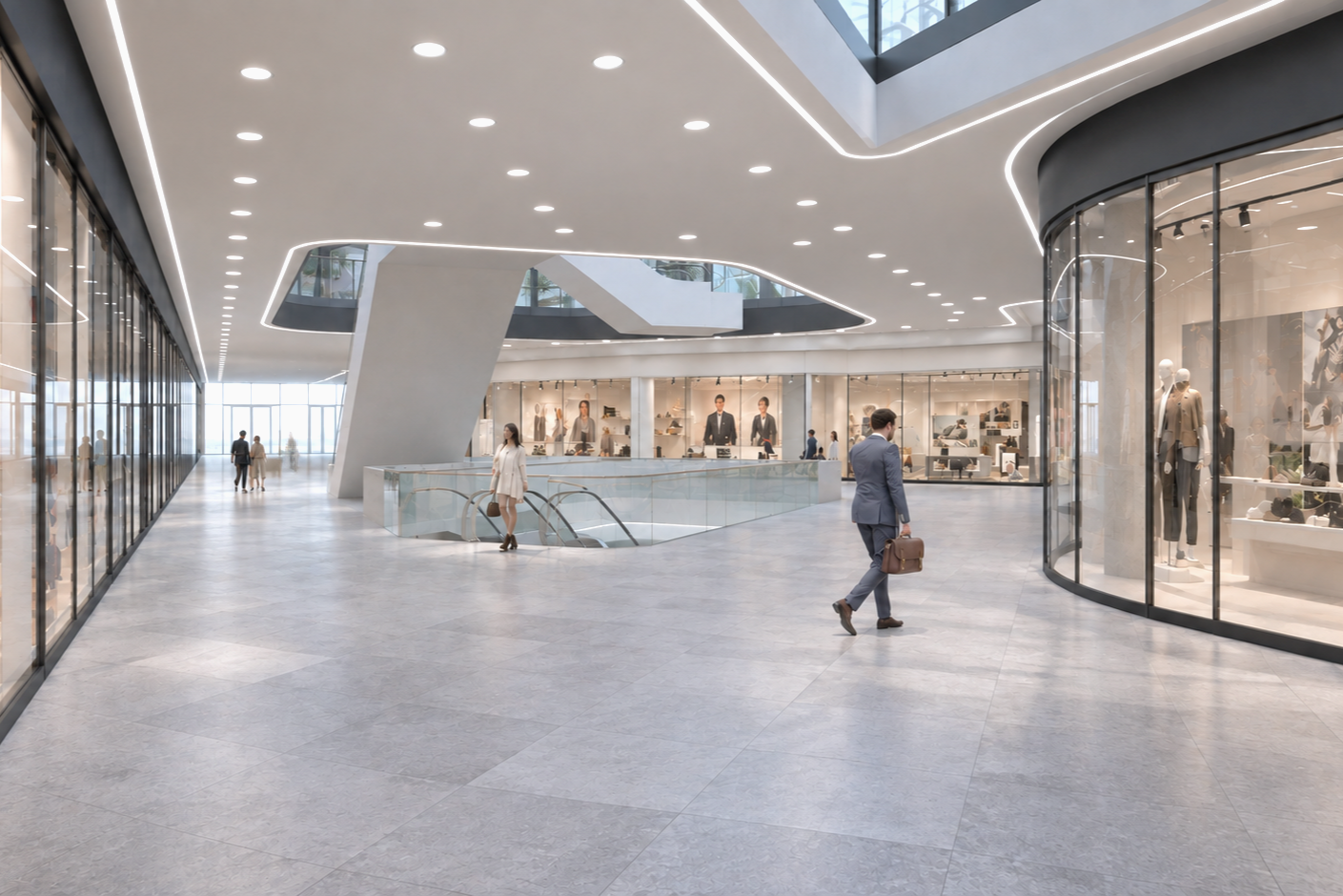
- Retail is arranged along main internal routes
- Upper levels accommodate leisure and entertainment
- Additional functions support daily routines
The building operates as both a transit point and a place of stay.
-p-2000.jpg)
-p-2000.jpg)
%20(1).png)
Strategic Significance
The project introduces a model where transport infrastructure directly supports commercial performance.
A steady flow of passengers generates continuous footfall and establishes a reliable base demand for retail. Movement is redistributed across the building, increasing exposure , improving tenant performance.
The mix of retail, leisure, and daily-use functions supports a more balanced and sustainable pattern of use over time.
Scale & Programme
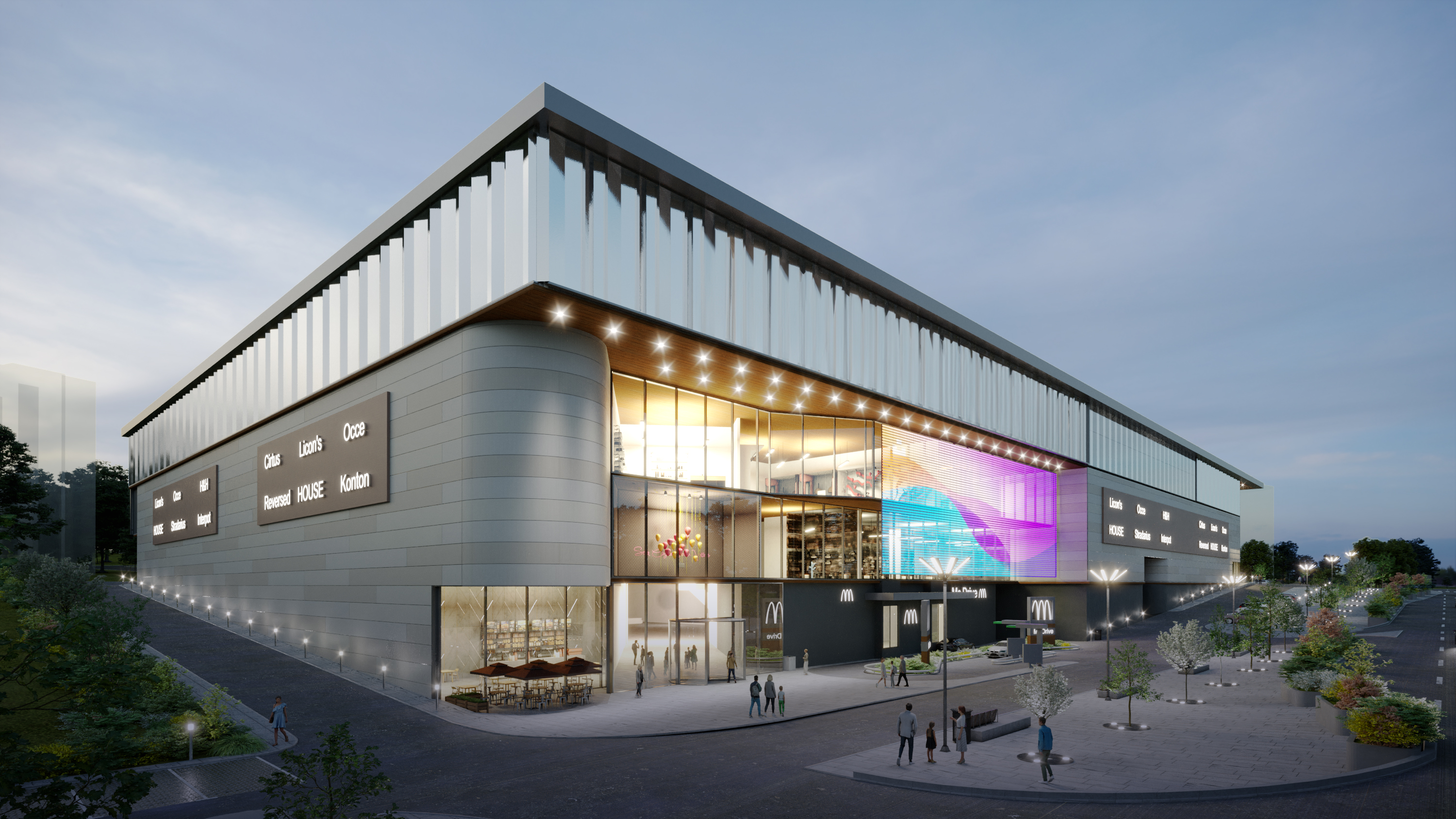
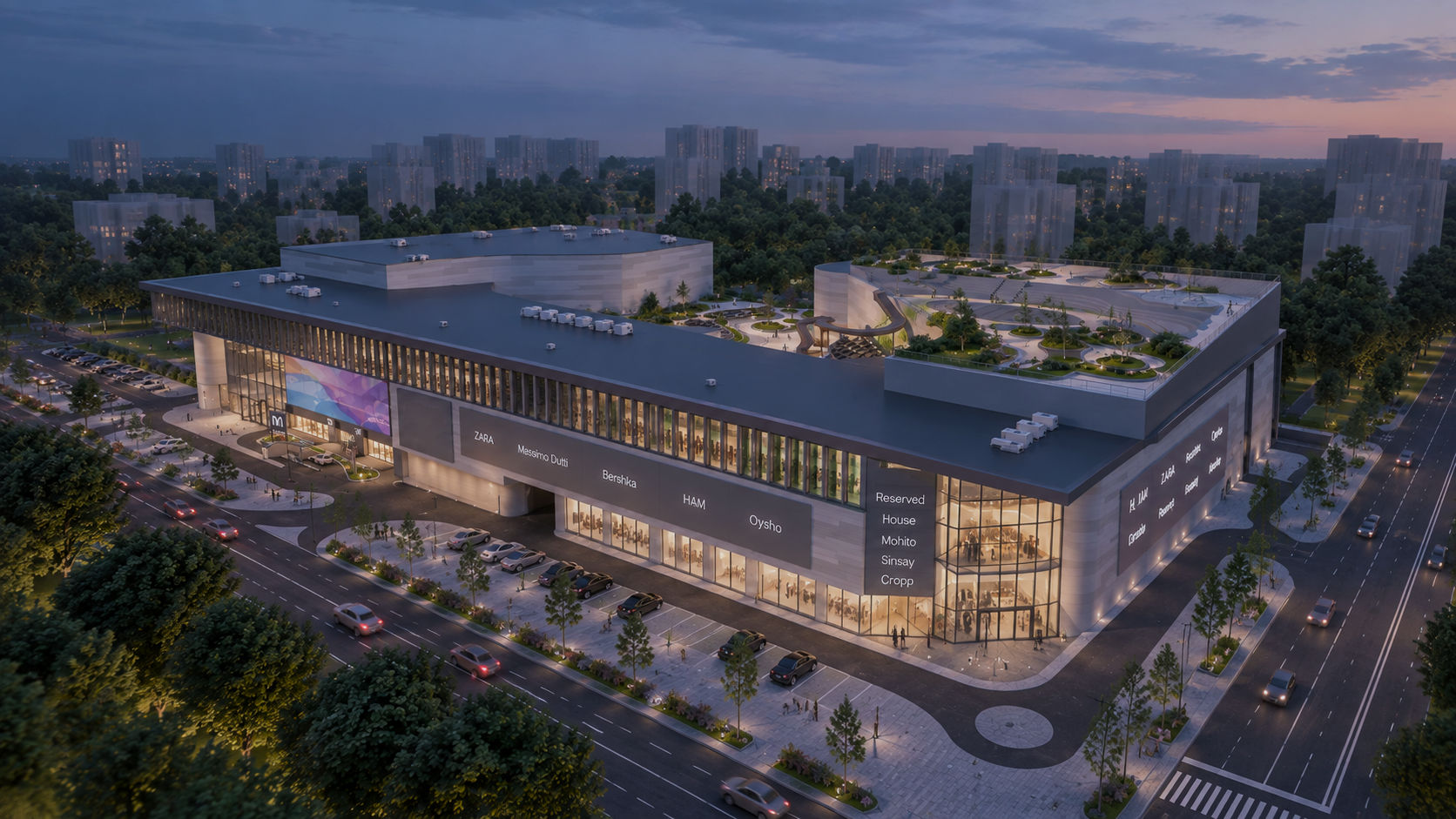
- 7+ integrated functions: Retail, Bus Station, GYM, Offices, Entertaiment, F&B, Usable Rooftop with public access, Parking
- 43,186 m² GBA
- 30,625 m² GLA with 71% efficiency
- Supermarket: 2,929 m²
- Retail units: 18,125 m² including anchor, MSU, shops, and kiosks
- F&B: 1,670 m² with an additional 683 m² Food Court seating area
- Entertainment centre with Cinema: 5,618 m²
- Bus station: 3,066 m² with 587 m² of technical areas
- 587 parking spaces
Key Challenges & Solutions Implemented
Spatial coordination of transport and retail
Circulation is clearly organized to ensure intuitive navigation and efficient use of space.
Quality of public environment
Open layouts, natural light, and visible frontages improve comfort and orientation.
Balanced use over time
A mix of functions supports activity beyond peak periods.
Result
Zvonařka evolves into a multifunctional urban node where transport infrastructure and commercial uses operate within a single system. The project redefines the role of a bus station, integrating it into an active public and retail environment.
The development improves accessibility, increases pedestrian activity and strengthens the connection between mobility and everyday urban use.
A bus station is no longer just a point of departure. It becomes part of the city, integrated with its daily rhythms, supporting movement and public life.
Get Your Express Architectural Analysis

Proven Results. Featured Work.
.jpg)
.svg)
.png)


.svg)


.png)
Fill in the form below and our team will get back to you shortly.
.svg)